On Shaky Ground: America’s Public Lands Face an Uncertain Future[1]
John Leshy
Table of Contents
I. The Lee Amendment and the Backlash it Triggered 247
II. The Public Lands Provisions of the OB3 Act 248
III. What Might be the Impact of the OB3 Act on Public Lands? 255
IV. How Did the OB3 Act Come About? 259
V. The Gilded Age — Then and Now 265
VI. The Hollowing Out Strategy and Its Effects 282
VII. Two Peculiarities of the Trump II Public Lands Policies 289
VIII. A Note on Alaska’s Importance in Public Land Policy 293
IX. So Will the Trump II Administration Change the Paradigm of Public Land Policy? 294
X. Climate Change and Its Impact 296
America’s public lands include such iconic places as Yellowstone and Yosemite but also include a great number of lesser-known lands with many attractive qualities. In recent decades most are increasingly being managed to protect these qualities. This has contributed to a booming population and economy in areas blessed with an abundance of public lands.[2]
Collectively, these lands¾which are generally available to all regardless of wealth or stature for outdoor recreation, education and inspiration¾can fairly be described as a shared national project, manifesting a collective spirit that resonates deeply in a nation that otherwise celebrates private property.[3]
This Essay offers an overview of sweeping changes made in public land policy and administration since Donald J. Trump resumed the presidency in January 2025, both inside the Administration and in the Congress. It then examines how political, legal, and cultural changes in recent decades help set the stage for these developments. That is followed by a look further back to an earlier era, the so-called Gilded Age, which set the stage for earlier sweeping changes that led to the public lands we see today. It concludes by considering whether the changes currently underway will be durable and fundamentally change the public lands and how Americans regard them.
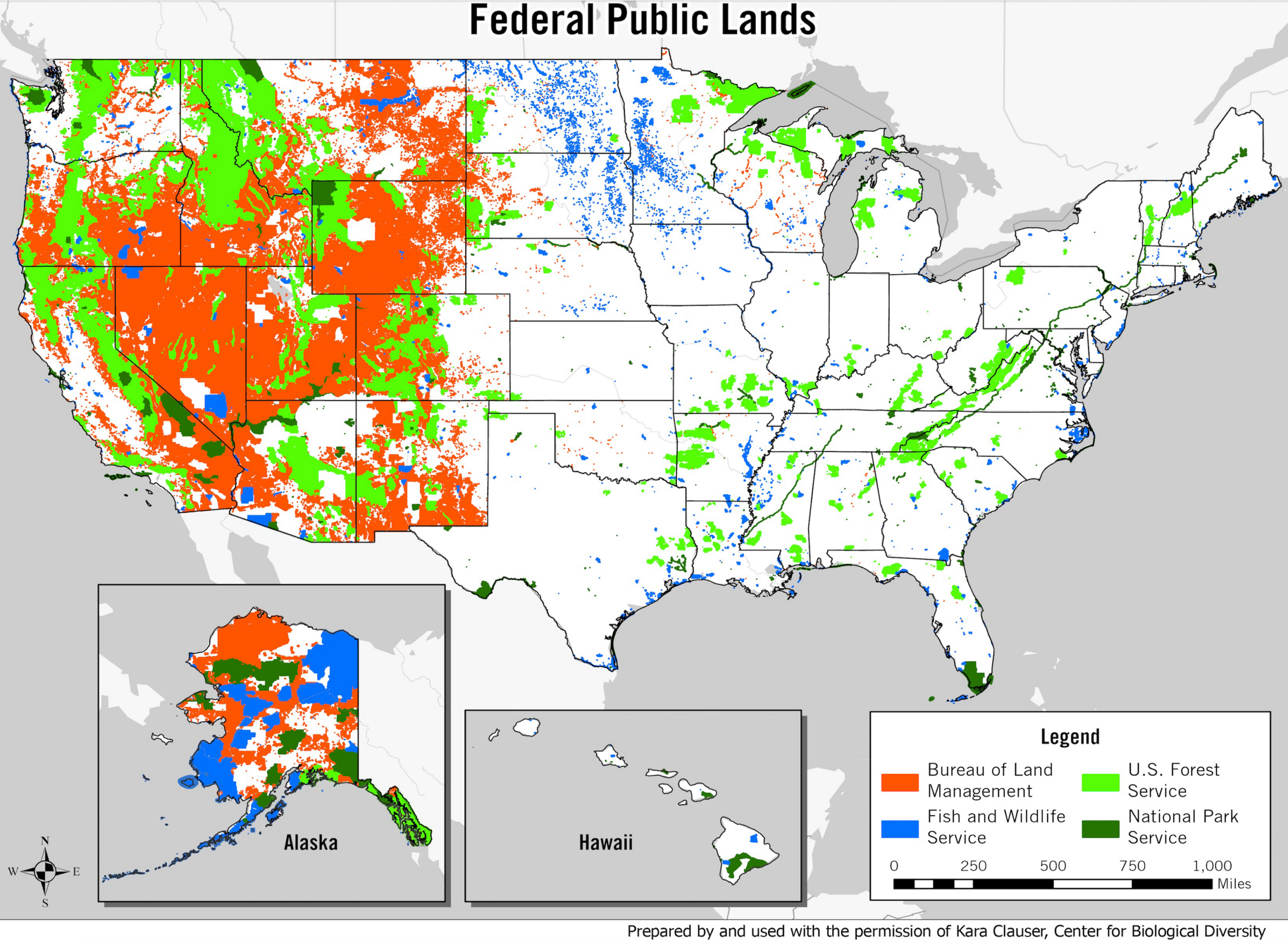
I. The Lee Amendment and the Backlash it Triggered
Public lands briefly captured national attention when, in June of 2025, Utah Senator Mike Lee proposed to amend the One Big Beautiful Bill Act (or the “OB3 Act”)[4] then pending in Congress to make a few million acres of these lands available for purchase.[5] The Lee amendment sparked widespread opposition not only from conservation advocates but also from hunters, anglers, ranchers, local communities, and, significantly, a number of Republican politicians in the West, where most of these lands are found.[6] On June 28, Lee withdrew his amendment.[7]
The backlash confirmed many years of opinion polls showing that the public lands are tremendously popular with Americans irrespective of geography, class, or politics.[8] Just five days before Senator Lee withdrew his amendment, the governors of the Western states, a majority of them Republicans, unanimously approved a policy resolution at their annual meeting that unequivocally supported “public access and sustainable outdoor recreation opportunities” on public lands, and called on the federal government to “ensure” that federal managing agencies have the resources needed to “accommodate increased visitation and enhance the visitor experience.”[9] Such a consensus view on any public policy issue is increasingly rare in our deeply polarized society.
II. The Public Lands Provisions of the OB3 Act
The hasty withdrawal of Lee’s proposal was properly celebrated as a big victory for public lands defenders. But it diverted attention away from public land provisions already in the OB3 Act that are much more threatening. Though they take up only about fifteen of the OB3 Act’s 328 pages,[10] they aim at industrializing many times the public lands acreage that would be sold under the Lee amendment.
Because these changes are now law, they will prevent or constrain future Administrations from tinkering with them, absent further congressional action. Put differently, they are in sharp contrast to the so-called “drill, baby, drill” initiatives to industrialize public lands that President Trump promoted in his first term. Those were almost all in Executive Orders full of showy rhetoric but having no more staying power than a typical New Year’s resolution.[11]
The OB3 Act requires the United States to offer to lease, on generous terms, tens of millions of acres of public lands for fossil fuel and other forms of industrial development. Not simply to consider it, or make it a targeted objective, but an explicit mandate to conduct lease sales of specified scope and terms on a specified schedule. While many tracts offered must have been “designated as open for leasing” under the pertinent resource management plan the Interior Secretary had previously approved for an area,[12] estimates are that such plans make as many as 200 million acres of public land open for leasing.[13] Even though some of these plans are several decades old, the OB3 Act forbids the Interior Secretary from including any new “stipulations or mitigation requirements”[14] in the leases it is required to offer so as to, among other things, protect wildlife or other features that could be adversely affected by such leasing.
These provisions are made even more problematic because these leases could remain in effect for many decades. Federal law gives oil and gas leases a primary term of ten years and provides that any such lease “shall continue so long after its primary term as oil or gas is produced in paying quantities.”[15] For years the Interior Department had been criticized for its lax application of this provision, effectively allowing leases to remain in force for a long time despite facts that show they are not producing oil or gas “in paying quantities.” As much as half of the leased acreage is not producing.[16] During the Biden Administration, the Department proposed to update its oil and gas regulations to address this concern, among other things.[17] Enactment of the OB3 Act effectively ended that effort.[18]
The OB3 Act requires the Bureau of Land Management (“BLM”) to hold such lease sales a minimum of four times each year in nine western states (including Oklahoma and Alaska), and to conduct replacement sales during the same fiscal year if earlier lease sales do not produce sufficient results.[19] Reversing a prohibition in existing law, it allows public lands to be leased without open competition, for just $1.50 per acre. It also encourages speculators to nominate public lands for lease by abolishing the $5 per acre nomination fee previously imposed by law, and by requiring BLM to offer up at least half of the nominated acreage within 18 months.[20]
The OB3 Act’s provisions regarding Alaska are especially noteworthy.
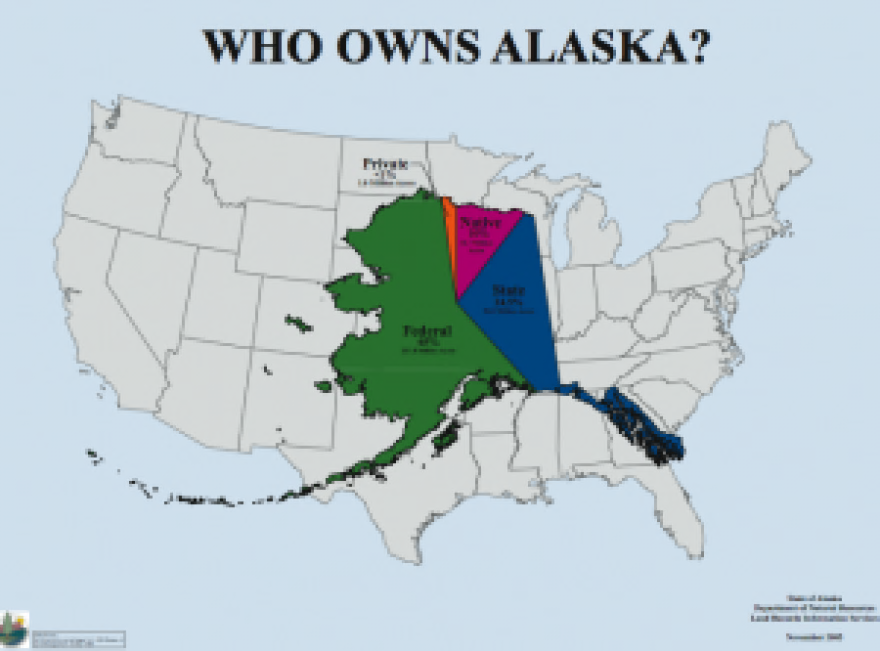
As explained further below,[21] Alaska public lands are unique because of their scale and largely intact natural splendor. For one thing, the OB3 Act requires the Interior Department to conduct, over the next seven years, four lease sales of a minimum 400,000 acres each in the coastal plain of the Arctic National Wildlife Refuge.[22] Whether to make that iconic 1.5-million-acre area available for petroleum development had been the subject of national controversy dating back to the 1960s.[23]
The OB3 Act’s provisions regarding the 23-million-acre National Petroleum Reserve (“NPR”) in northwestern Alaska are even more far-reaching. The NPR was established by President Harding in 1923 as a potential fuel source for the Navy as it was converting from coal to oil and gas.[24] In 1976, Congress put the NPR under BLM management and sought to strike a balance between developing any petroleum it may contain and protecting its rich “environmental, fish and wildlife, and historical or scenic values.”[25] The Conference Report on this legislation called on the Secretary to “take every precaution to avoid unnecessary surface damage and to minimize ecological disturbances throughout the reserve.”[26] Four years later, Congress directed Interior to put in place a program of competitive oil and gas leasing on the NPR without specifying an acreage target. It did direct Interior to include, in any leases it did issue, “such conditions, restrictions, and prohibitions as . . . necessary or appropriate” to protect these other values.[27]
Ever since, successive Administrations have worked to strike an appropriate balance between development and preservation, including providing special protections in some areas for migratory waterfowl, caribou, and other wildlife.[28] While leases have been issued on a small fraction of the Reserve, and some oil and gas development is taking place, the vast majority of Reserve lands have not been leased.[29]
The OB3 Act makes a huge change. It requires Interior to conduct five lease sales of at least four million acres each over the next ten years. Along with already leased land, this could put practically all of the NPR’s 23 million acres under lease. The OB3 Act also specifies that the terms and stipulations of these leases shall be those specified in the first Trump Administration in December 2020, thus preventing future Administrations from including more protective conditions.[30]
The OB3 Act contains similarly aggressive mandates to boost the sale of oil and gas leases on submerged public lands off the nation’s coasts, including Alaska. The Act was careful not to mandate leasing everywhere offshore, however, because it preserved “existing oil and gas leasing moratoria.”[31] This has conveniently left room for the Interior Department to say no to leasing in some places like southeastern Florida where President Trump’s home, Mar-A-Lago, is located. It is not a surprise that the Administration is apparently planning to protect Republican strongholds while aggressively leasing off coasts where Democrats are dominant.[32] Put another way, the second Trump Administration has apparently learned from the experience of the first Trump Administration, which encountered serious Republican opposition to its proposal to lease submerged public lands off the west coast of Florida.[33]
Both onshore and offshore, the OB3 Act reduces royalties that oil and gas lessees must pay the federal Treasury down to a minimum that Congress established many decades ago.[34] It has been estimated that these and other provisions of the OB3 Act will effectively deliver $18 billion to fossil fuel companies over the next decade,[35] and slash federal revenues by tens of billions of dollars over the next couple of decades.[36] Under the revenue-sharing provision of the Mineral Leasing Act, states will bear half of the loss of federal revenues from onshore leases.[37]
The OB3 Act also mandates an aggressive program of coal leasing on public lands, requiring the Interior Department to offer leases, at a significantly reduced royalty rate, on at least four million acres of known coal reserves on public lands.[38] The Administration subsequently indicated it intended to go well beyond this statutory minimum by putting more than 13 million acres of federally owned coal up for leasing.[39]
The OB3 Act also requires the U.S. Forest Service and the BLM to nearly double the amount of timber they sell from public lands over the next seven years. This new program is to be implemented by entering not fewer than forty long-term timber sale contracts for periods of not less than 20 years, with options for extensions or renewals.[40] While the OB3 Act makes these timber sales “subject to the maximum allowable … or projected timber sale quantity under the applicable forest plan” that is in effect on the date of the Act was enacted,[41] how much those plans actually limit the quantity that can be offered for sale is not easy to calculate. In any case, because “in practice actual [timber] sales have been below [allowable] levels for years,”[42] it seems practically certain that a significant increase in timber sales will result.
III. What Might be the Impact of the OB3 Act on Public Lands?
How much additional extraction of fossil fuels and timber from public lands will actually result from these OB3 Act provisions is hard to predict. The availability of public lands is only one component of the calculation potential bidders for such leases or contracts make, with overall market forces being a key driver of industry behavior.[43] Historically, only a portion of public lands offered for leasing have resulted in actual leases, and only a portion of lands leased have seen on-the-ground development.[44] Still, unless and until changed by Congress, the OB3 Act will make minerals and timber on vast amounts of public lands available for acquisition by petroleum, mining, timber and other industrial enterprises and speculative investors.
While the OB3 Act does not require the United States to divest itself of complete ownership of public lands, like the Lee proposal would have done, it does contemplate transferring partial property rights to mine and log tens of millions of acres of public lands, rights that could remain in existence for many decades. The effect of this should not be underestimated.
While they are in effect, these partial property rights will greatly complicate, and in some cases simply thwart, efforts to conserve wildlife and other natural values, and interfere with recreation dependent on such values. And that impact will be felt, it should be emphasized, not simply on the lands that are subject to these leases and contracts, but also on other public (as well as non-public) lands in the vicinity. The impact of leasing just a portion of a wildlife migration route, for example, can extend far beyond the boundaries of the lease. Indeed, numerous examples of such conflicts have already emerged in the few months since the OB3 Act became law.[45] In short, the millions of acres that may be leased or made subject to timber contracts will likely comprise only a fraction of the public lands the OB3 Act’s provisions will impact.
Moreover, even if public opinion remains strongly supportive of preserving natural values on many of these public lands, the presence of these partial property rights will constitute a major obstacle to achieving that desired goal. Put differently, overcoming those property rights can require strenuous efforts, including significant outlays of public funds.
This is not mere speculation. In the early 1980s, President Reagan’s Interior Secretary James Watt issued oil and gas leases on areas of public lands that were highly regarded for their natural values.[46] One such area was the Rocky Mountain Front that extends along the eastern escarpment of the Rockies in northern Montana. Many opposed its industrialization, including the Blackfeet Tribe that had ancestral sacred ties to the area.[47] But it required forty years of effort and the outlay of tens of millions of public and private dollars to remove the threat by retiring the leases Secretary Watt issued.[48]
The proliferation of leasing set in motion by the OB3 Act is also likely to create other costs to the taxpayer, by multiplying the occasions for lessees who take steps to extract these resources to walk away and leave state and federal taxpayers on the hook to pay for the cost of cleanup.[49] Such costs, which have been well-documented, easily run into many billions of dollars.[50] This led a group called Conservatives for Responsible Stewardship to express concern that, because as many as 3.8 million wells could be drilled on the public lands in the coming years, it could “pass as much as $753 billion in potential financial liabilities [primarily from cleanup and related costs] back onto local communities and taxpayers.”[51]
All things considered, then, the OB3 Act’s overall effect on the public lands is likely to turn out to be much, much larger than the impact of Senator Lee’s proposal to make a permanent transfer of complete title to a few million acres. There is, then, considerable irony in the fact that the defeat of the Lee proposal helped disguise the nearly simultaneous decision by the Trump Administration, the fossil fuel industry and its allies, and the Republicans tightly controlling the Congress, to partially privatize many times that acreage of public lands. Indeed, it is entirely plausible that many of those involved in that decision may have welcomed the controversy over the Lee proposal for diverting public attention away from their agenda.
IV. How Did the OB3 Act Come About?
Congress approved the OB3 Act on a party-line vote and President Trump signed it into law on July 4, 2025. Its several hundred pages of text extended way beyond public lands to encompass a wide range of tax and health care adjustments and other major policy changes, funding reallocations, and regulatory adjustments across huge sectors of the American economy.[52] For example, the OB3 Act increased the funding of Immigration and Customs Enforcement roughly tenfold, to more than $100 billion that can be spent over four years, giving it more federal dollars than that given to all other federal law enforcement agencies combined.[53]
Taking advantage of the budget reconciliation process to avoid a Senate filibuster, the OB3 Act was put together by the White House, a handful of lobbyists, and members of Congress, almost entirely behind closed doors, over just a few weeks, without a single hearing by any committee in either house.[54] Coming at a time when Republicans held very slim margins in both Houses of Congress, it was a dramatic illustration of how, over the past couple of decades, the traditional, deliberative, inclusive, compromise-laden legislative process has broken down.[55]
The deepening polarization in our political system is partially the result of widespread gerrymandering of congressional districts, which has created a huge number of “safe seats” for members of one party or the other and makes it harder for constructive facilitators to have successful political careers.[56]
A larger cultural factor contributing to growing polarization in our politics is the dramatic change in how most Americans obtain basic information about what is happening in our society. Traditional print and digital media have been fragmented and sharply reduced in reach, supplanted by the proliferation of social media.[57] Many of the social media sources pay little attention to determining and conveying the truth, a tendency famously captured in the phrase “alternative facts” first used by Kellyanne Conway, an official in the first Trump Administration.[58] Her phrase was extensively described as Orwellian, and indeed, within four days of her introducing the phrase, sales of George Orwell’s novel 1984 had increased 96-fold, which was widely attributed to Conway’s use of the phrase, and which catapulted Orwell’s book to the top of Amazon’s best-seller list.[59]
These days, powerful media platforms like X and Meta, controlled by a small number of very wealthy interests, no longer worry much about supplying their users with accurate information. Instead, to maximize profits, they have largely ended any semblance of fact-checking the information they make available.[60] Thus, as one observer put it, a technology that originally “promised to give everyone information and a voice has consolidated, in just a few hands, the power to destroy the very notion of objective truth,” a power increasingly exercised to make the very wealthy even wealthier.[61] Or, as another commentator recently put it, as the technology industry grew more dominant over time, its leaders lost their idealism and “put corporate self-interest ahead of customers,” so that it now “looks a lot like finance: power without accountability, and profit without purpose.”[62] Closely related to this is the seemingly ever-growing lack of respect for, and disregard of, the teachings of science, on issues ranging from vaccinations to climate change.[63]
A fundamental factor at play in much of this is the sharp rise in wealth inequality, with the richest one-tenth of 1% of Americans—one in a thousand—now controlling almost six times as much wealth as the bottom half, a vast divide that has increased dramatically in the last few decades.[64] That leaves lots of Americans feeling worse off, and there is much evidence that people tend to judge the fairness and effectiveness of their political system by how they are doing in it.[65] Federal tax policy has fueled that inequality, with many commentators noting that the tax provisions of the OB3 Act sharply favored the wealthy.[66]
The very wealthy are exercising increasing control over our political system, a trend greatly facilitated by the U.S. Supreme Court in its 2010 Citizens United decision.[67] There, a conservative majority of the Court reversed a century of precedent to hold that the Constitution’s free speech clause gives corporations and others the right to spend unlimited amounts of money to influence elections, a right that neither the Congress nor state legislatures can restrict.[68] Two months later, the federal court of appeals for the D.C. Circuit applied this principle to immunize contributions to so-called political action committees or “super PACs” that do not give money directly to candidates or parties. [69] Then, in 2014, the Supreme Court held that the principle applied to prohibit limiting what an individual can give in an election cycle to all federal candidates, political parties, and political action committees combined.[70] The effect of these decisions was entirely predictable—a huge increase in dollars flooding the political system, mostly from the wealthiest corporations and individuals.[71]
The conservative majority currently in control of the Supreme Court has issued other rulings that helped lay the groundwork for the OB3 Act. One is its 2019 decision that partisan gerrymandering presents a political question beyond the purview of the courts, over the dissent of Justice Kagan, joined by Justices Jackson and Sotomayor, that it “debased and dishonored our democracy” and “deprived citizens of the most fundamental of their constitutional rights: the rights to participate equally in the political process.”[72] The conservative majority has also signaled it will be very skeptical to claims that gerrymandering, like that recently put in place by Texas discriminates against racial minorities.[73] And in 2024, a similar majority ruled that the President can exercise autocratic control over the executive branch and enjoys blanket immunity from legal liability for practically everything he does.[74]
And as for the Congress acting as a check on the president, the OB3 Act is a vivid demonstration of its acquiescence in President Trump’s exercise of “unconstrained, unmoderated, unilateral authority” that is, according to many historians, without precedent in modern American history.[75]
All this makes it hardly surprising that President Trump is giving the wealthy interests opportunities to take control of a good many public lands to serve their objectives.[76] The OB3 Act’s leasing provisions rewarded the oil and gas industry’s heavy contributions to the President and congressional Republicans in the 2024 election cycle, which came after President Trump openly solicited them and assured them he would do their bidding.[77] A headline in a September 2025 Wall Street Journal story succinctly captured what happened: “Oil Tycoons Bet Big on Trump: It’s Paying Off.”[78] The White House touted the OB3 Act’s terms as making “good on his campaign promises,”[79] which seemed designed to restore the fossil fuel industry to its previous pre-eminence in electricity generation. In fact, he signed the OB3 Act into law just a few weeks after, for the first time on record, fossil fuels generated less than half of the nation’s electricity, a steep drop from ten years earlier, when they accounted for almost two-thirds.[80]
All told, the political and cultural forces that laid the groundwork for the OB3 Act reflect fundamental changes that could, going forward, have a large effect on America’s public lands.
V. The Gilded Age — Then and Now
Even though the vast majority of Americans support the national government continuing to hold and protect large amounts of land, the recent events described in this Article are cutting against this. These events are threatening to shift the paradigm in public land policy that has prevailed for more than a century, as shown in the following charts. The charts capture how, decade by decade since 1870, more and more land came to be held in national ownership, and more and more of those lands came to be mostly protected from industrial activity like mining, drilling, and logging.[81] (Alaska is depicted separately because of its scale and its somewhat different historical course compared to lands in the lower forty-eight.)
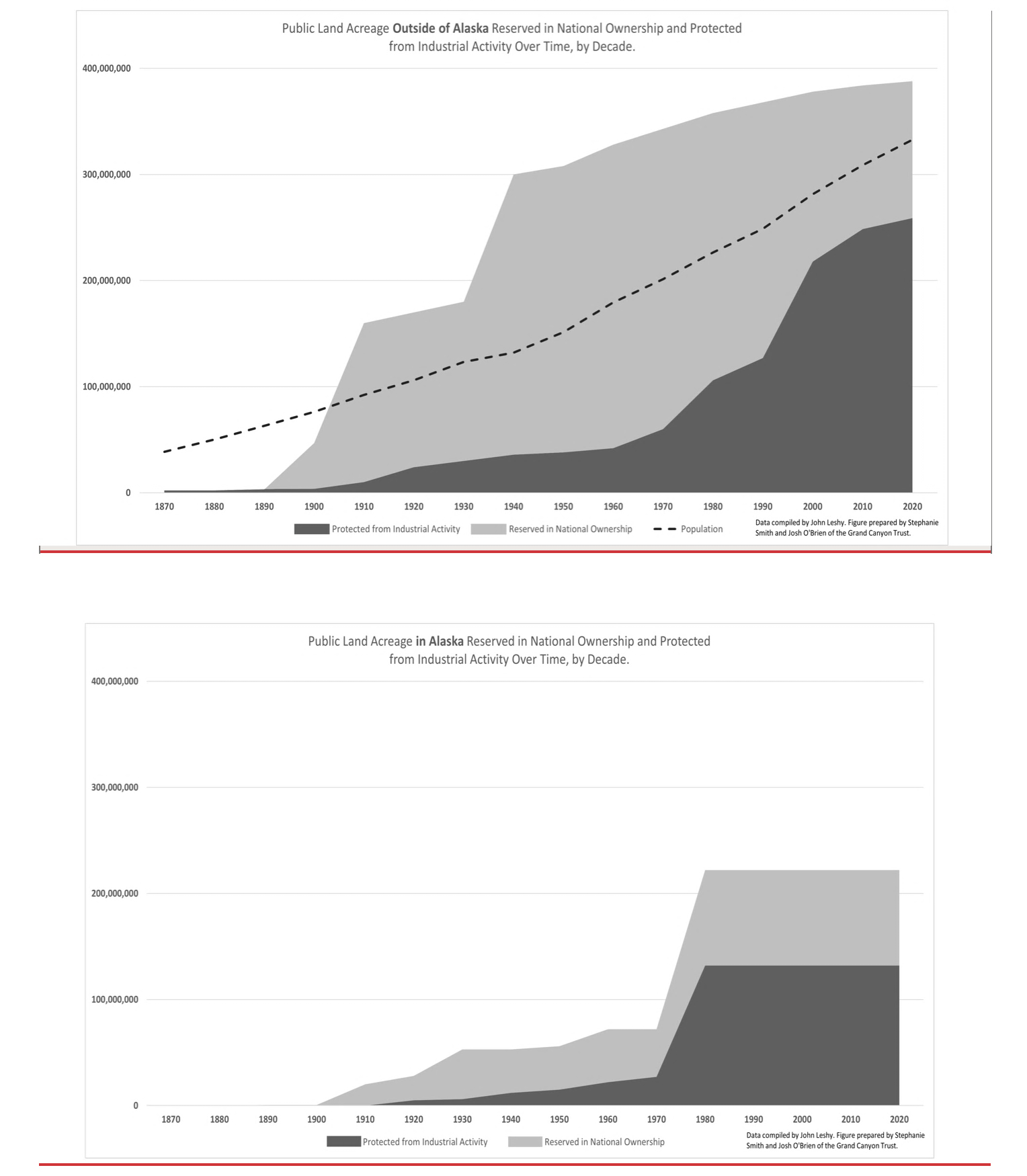
The paradigm shift in public lands policy took firm hold around the turn of the twentieth century. It was in part a reaction to the plunder, corruption, and monopolist power that marked the last few decades of the nineteenth century, during what came to be known as the Gilded Age.[82] Then, as now, some of the richest Americans and biggest corporations were accumulating unimaginable wealth and engaging in what one prominent historian called an “orgy of conspicuous consumption,”[83] while many ordinary Americans were stagnating, or worse. It is also worth noting that the practice of partisan gerrymandering¾recently the subject of intense debates and deliberations in many states, instigated in large part by President Trump¾was widespread in that era.[84]
Like all land in the U.S., today’s public lands were once controlled by Indigenous peoples. Their dispossession began in the wake of Columbus’s voyages to the Caribbean and continued after the U.S. was established in the wake of the Revolutionary War. From then until not long after the Civil War, U.S. policy was to give away most of the lands it acquired from Indigenous peoples and foreign governments to settlers, new states, miners, railroads and other industrial interests, and a variety of speculators.[85]
Indigenous dispossession was largely completed before 1890, when, as the first chart shows, the movement to hold onto and protect lots of public lands in national ownership gained traction.[86] That sequence of events meant that advocates of holding and protecting lands in national ownership, and federal agencies like the National Park Service and U.S. Forest Service played almost no role in the long and frequently dishonorable story of Indigenous dispossession. In the last few decades, these agencies and the Indigenous interests who still strongly identify with these lands have increasingly cooperated and collaborated in the management of the public lands. Indeed, the growing influence of Native Americans is one of the major developments in public land policy in modern times.[87]
Public lands figured prominently in that first Gilded Age. The Mining Law of 1872, which formally threw the public lands open to industrial mining with almost no constraints—a law that is, remarkably, still largely in effect for most public lands managed by the U.S. Forest Service and the BLM—was characteristic of the era.[88] The Mining Law’s champion was Senator William Stewart (R. Nev.), a lawyer who made a fortune promoting the development of minerals from public lands.[89]
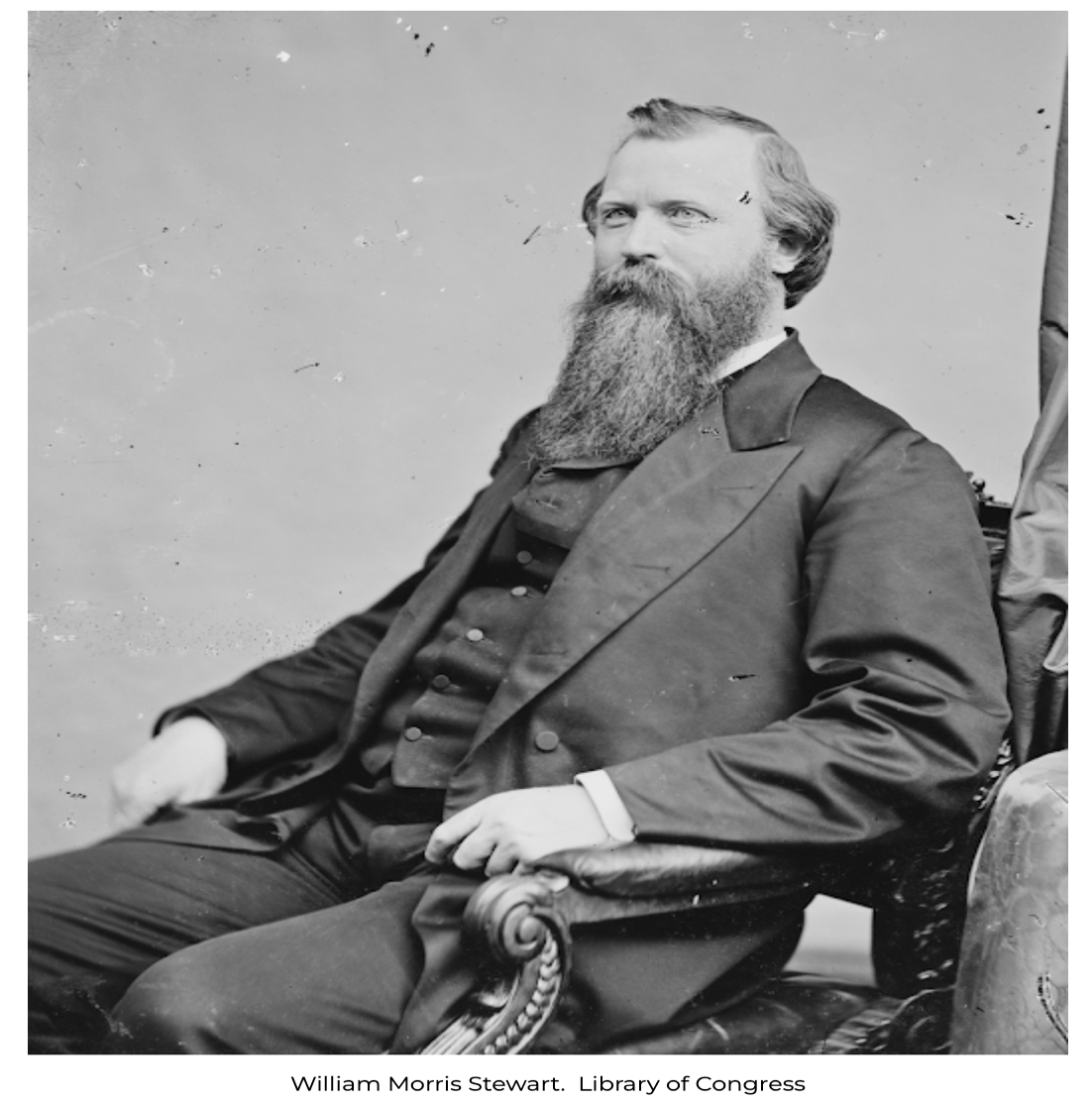
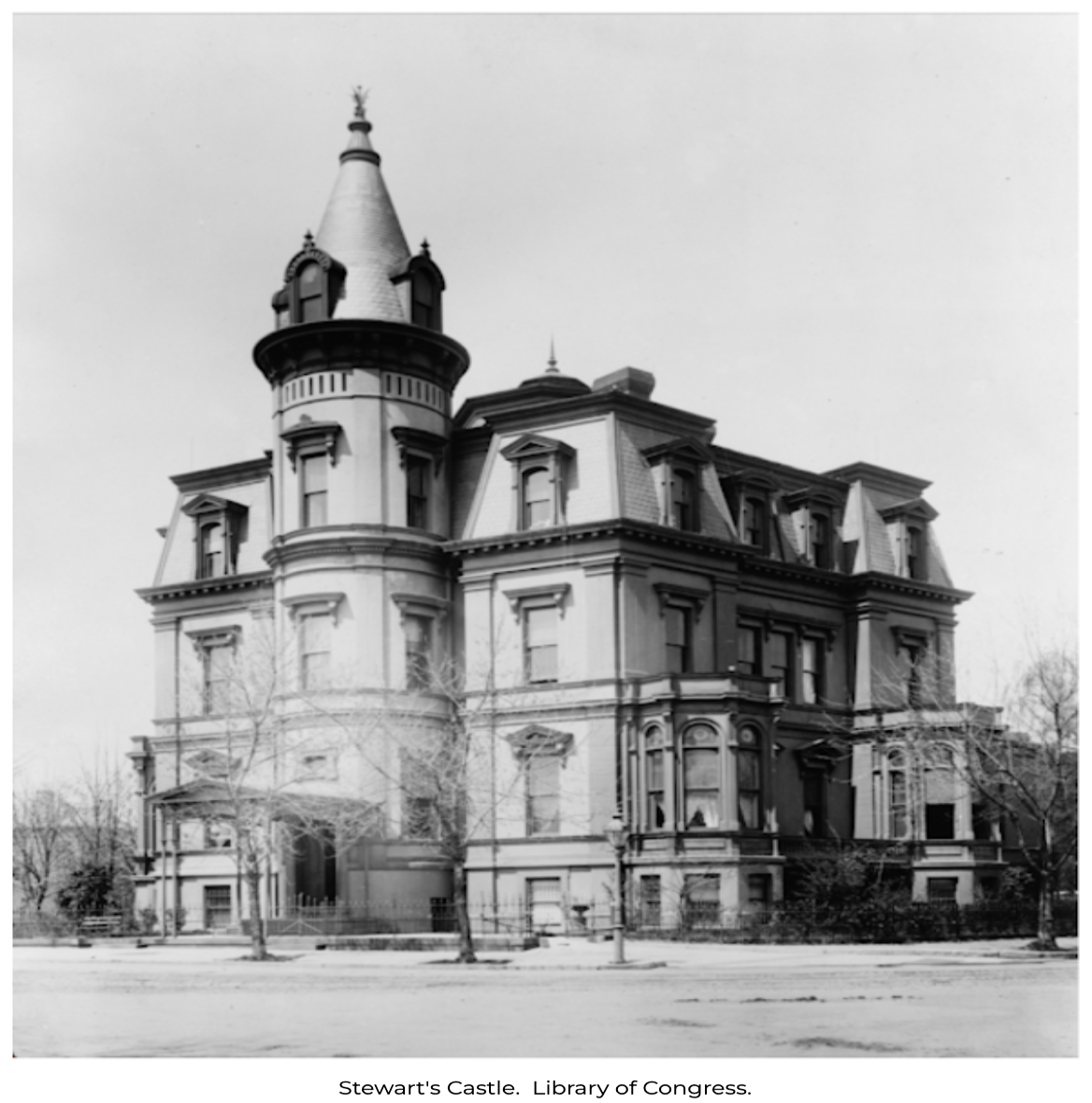
When Stewart became one of Nevada’s first Senators at the age of thirty-seven in 1864, he had already amassed huge wealth.[90] In true Gilded Age fashion, he built the District of Columbia’s largest dwelling on Dupont Circle, a 19,000-square-foot house known as “Stewart’s Castle.” A journalist wrote that attending one of the lavish receptions Stewart held in his Castle “makes one feel like Marco Polo at the Court of Kubla Khan.”[91] In fact, the label Gilded Age was taken from a novel of that title published in 1873 and co-authored by Mark Twain, who not long before had served on Senator Stewart’s staff until Stewart fired him.[92]
George Julian (R. Ind.), chair of the House Public Lands Committee from 1863 to 1874, was the primary opponent of Stewart’s Mining Law.[93] He later wrote in his autobiography that it was “easy to see that this was an act to encourage litigation” and “not to promote the real interest of the miners or increase the product of the mines.” He also noted that the “business of mining naturally awakens the strongest passions [as it] sharpens the faculties and dulls the conscience,” so that when the law “compels a man to choose between an expensive and hazardous litigation and robbery, human nature is severely tried.”[94]
Seemingly proving Julian’s point, Stewart left the Senate in 1875 after becoming deeply enmeshed in a scandal involving peddling stock in a worthless Utah mine to British investors.[95] But he escaped prosecution. In 1886, the state legislature, which then chose Senators, obligingly returned him to the Senate, where he served until 1905.[96]
In 1897, Stewart showed the bias of the wealthy by harshly criticizing the trend already well underway to protect many western public lands by putting them in forest reserves. While he did not challenge the notion that the national government could protect lands with “novelties, curiosities, and strange developments of nature as places of resort,” he called reserves for broader conservation purposes “a most absurd proposition on its face” and a “great blunder.” He went on to blast President Cleveland’s creation of new forest reserves on many millions of acres of public lands as “barbarous,” an “outrage upon the West,” and a “disgrace to American civilization.”[97] Wallace Stegner memorably called Stewart a figure “to delight a caricaturist and depress a patriot.”[98]
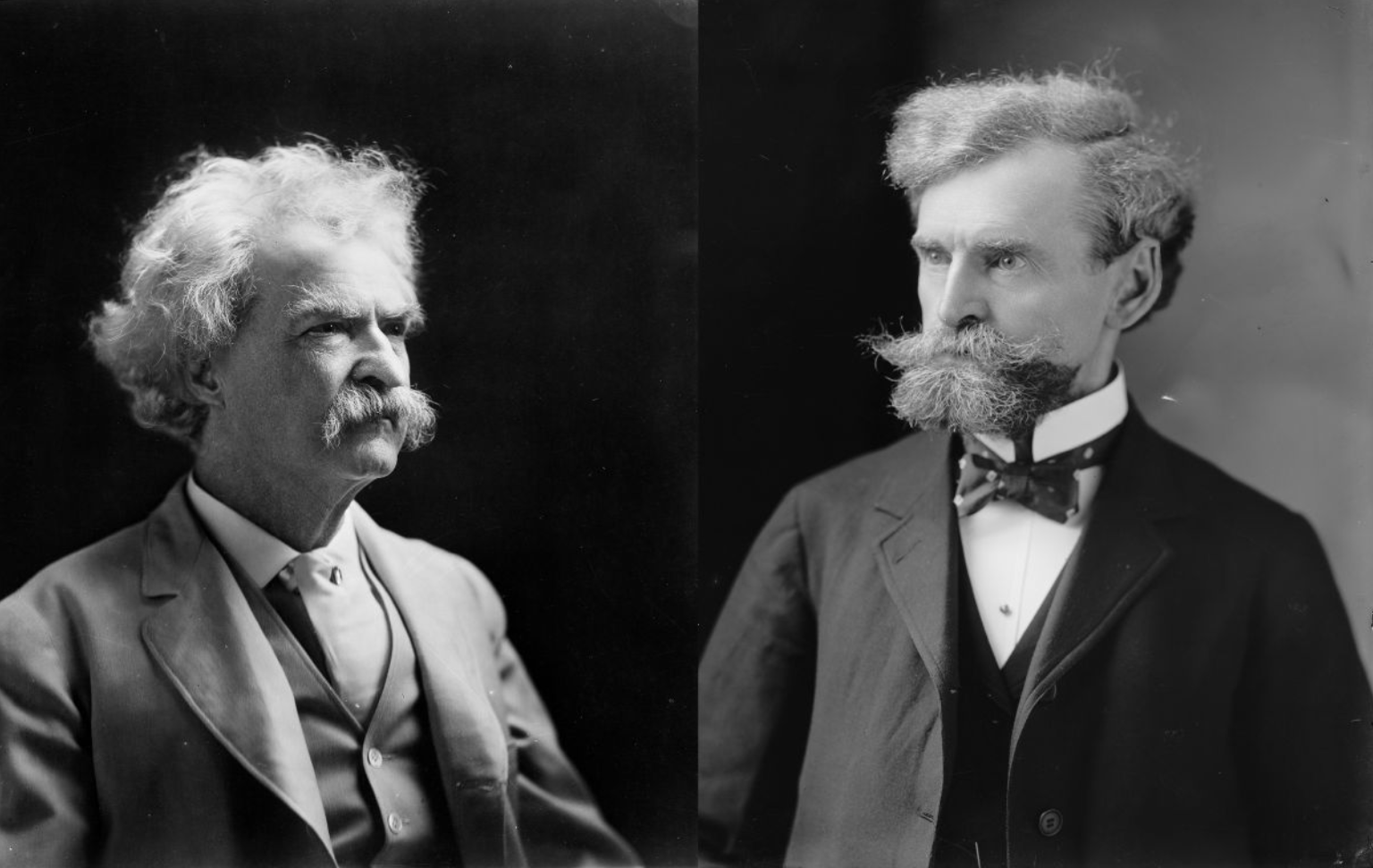
One of Stewart’s Gilded Age counterparts was the so-called “Copper King”, William Andrews Clark, who was one of the wealthiest Americans of his era. Clark had bribed a majority of the Montana legislature to obtain a seat in the U.S. Senate in 1899, reportedly defending his action by saying he “never bought a man who wasn’t for sale.”[99] When the U.S. Senate refused to seat him because of the bribery, he persisted, eventually serving a single term from 1901 to 1907. It was only fitting that, upon his arrival in Washington, the Copper King bought “Stewart’s Castle.”[100]
Mark Twain once called Clark “as rotten a human being that can be found anywhere under the flag.”[101] Shortly before he left the Senate, Clark condemned the forest reserves that by then had been extended to well over a hundred million acres of public land because, he said, they made it more difficult to log the forests. He rejected the argument that the reserves would benefit future generations this way: “Those who succeed us…can well take care of themselves.”[102] Clark’s remark addressed the question that famed economist Robert Heilbroner posed several decades later in an essay in the New York Times; namely, “What Has Posterity Ever Done for Me?”[103] Contrary to the Copper King, Heilbroner argued that concern for posterity is a moral imperative, a belief held by many advocates for protecting public lands who characterize degradation of public lands as a form of “intergenerational theft.”[104]
Many of today’s wealthiest seem to share Clark’s attitude—a “hostility toward collective investment in the common good and a shared future,” as one commentator recently put it.[105]
Elon Musk, for example, has said that “the fundamental weakness of western civilization is empathy.”[106] By contrast, Leo XIV, the current Pope, who spent his first twenty-seven years in the United States, explained to the College of Cardinals that he chose his name because Leo XIII had championed the rights of ordinary people during the original Gilded Age.[107]
Like President Trump’s keen interest in fostering politically partisan gerrymandering,[108] his close ties to wealthy interests seeking to gain control of many public lands are strongly reminiscent of what happened in that 19th century Gilded Age.[109] As Fareed Zakaria recently wrote, the President and his allies are moving on many fronts to replace what has been called a meritocracy, which places a “premium on competence over lineage, on work over patrimony,” with “something older, cruder and more corrosive: a naked plutocracy—rule by the very rich.”[110]
Indeed, earlier this year President Trump noted that America was at its “richest from 1870 to 1913.”[111] His Commerce Secretary, Howard Lutnick, has called that earlier era America’s “golden age,” when “we had so much money that we had the greatest businessmen of America get together to try to figure out how to spend it.” [112] It is not a stretch, in other words, to conclude that reviving the excesses of the earlier Gilded Age is an overarching goal for Mr. Trump and his Administration—they have said exactly that.
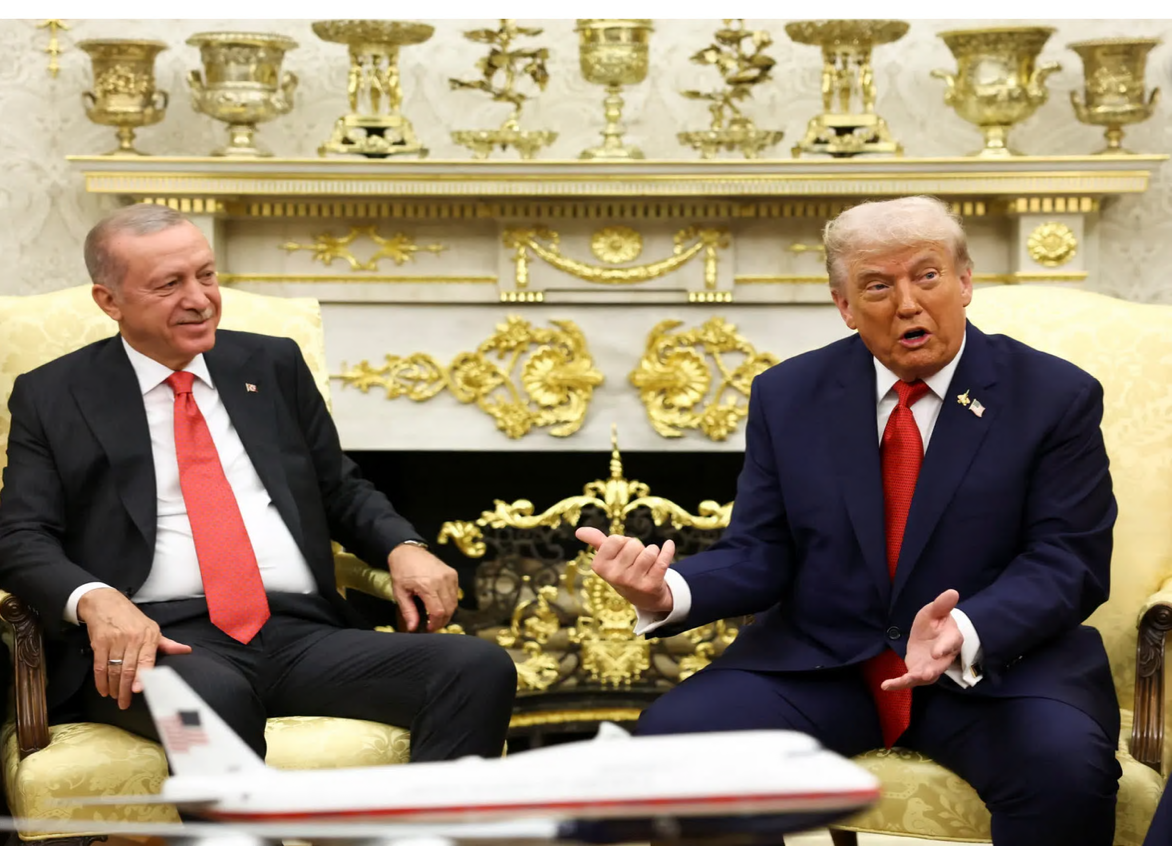
And so it is not surprising, as a New York Times story headline put it on the eve of the President’s swearing in for his second term, that a “Trump Oligarchy is Moving to Washington, and Buying Up Prime Addresses.”[113]
Similarly, it is hardly surprising that in enacting the OB3 Act, Congress left undisturbed Senator Stewart’s Mining Law of 1872. That law that still gives developers of gold, silver, and a wide range of other minerals a free ride to exploit public lands with minimal regulation, despite the fact that the vast majority of Americans do not want industrial interests to dominate public land policy.[114] One of those other minerals is uranium, and some have predicted a boom in uranium extraction from public lands.[115] In December 2025, further making the case we are in a new Gilded Age, the House of Representatives approved a “Mining Law Clarity Act” sponsored by both Democratic and Republican members from Nevada. It would give the hard rock mining industry a right to use as many public lands still open to the Mining Law as it wants in order to facilitate mineral extraction.[116]
Other indications that we are once again in a Gilded Age can be found in the kind of people President Trump has put in positions of authority over public lands. His Interior Secretary Doug Burgum, who made a fortune in the tech industry,[117] has repeatedly characterized the public lands as a gigantic fiscal asset on the national “balance sheet.”[118] He has also long closely associated with one of the richest Americans, a Texas oil tycoon who, according to the Wall Street Journal, high-fived the President last November at the Mar-a-Lago election night party.[119]
Trump’s Energy Secretary, Chris Wright, previously headed a multi-billion-dollar natural gas fracking company.[120] Michael Boren, the founder of a multi-billion-dollar tech company, was confirmed by the Senate in October 2025 as Undersecretary of the Agriculture Department for Natural Resources and the Environment. There he supervises the Forest Service, an agency with which he previously had numerous disputes arising from how he was using Idaho lands he owns within the Sawtooth National Recreation Area it manages.[121] In November 2025 Trump nominated former New Mexico Congressman Steve Pearce to be Director of the BLM. Before joining Congress, Pearce owned and operated an oil field service company, long supported transfers of public lands out of federal ownership and opposed many public lands conservation initiatives.[122]
Billionaires are the largest private landowners in several public-lands-rich western states, and there are numerous examples of conflict between some of them and recreational users of public lands.[123] A North Carolinian billionaire bought a ranch in Wyoming that stretched across more than 32,000 acres, including about 11,000 acres of federal public land in a checkerboard pattern of ownership—the legacy of a giant federal land grant Congress made to the first transcontinental railroad in 1864. When three sport hunters stepped momentarily into the airspace over a corner of his land in order to access those interlocked public lands, he sued them for trespass and demanded $9 million in damages despite the lack of any tangible harm.[124] He sought, in other words, to monopolize public access to those public lands, a gambit that during the first Gilded Age eventually led Congress to enact legislation outlawing what it called “unlawful enclosures” of public lands.[125]
Other plutocrats have done similar things in Idaho and other parts of the West.[126] History is littered with other illustrations of plutocratic attempts to plunder public resources, as when they purchase inholdings within areas of protected public lands, threaten to develop them, and then insist on receiving a high price to give up their property rights¾behavior many view as a form of extortion.[127]
It is worth noting that some holders of BLM and Forest Service permits, which allow for grazing livestock on more than 200 million acres of public lands, are fabulously wealthy. In 2021, for example, a large ranch that includes permits to graze many thousands of acres of public land in Montana’s beautiful Centennial Valley west of Yellowstone changed hands. The seller: an affiliate of the Koch Brothers, rightwing libertarians whose fortune derived from the oil industry. (Though the Koch interests did not support President Trump’s re-election, they gave more than $400 million to conservative candidates in the 2024 election cycle.[128]) The buyers: Rupert Murdoch, the multi-billionaire owner of Fox News, the Wall Street Journal, and many other enterprises, and his spouse.[129] In fact, according to several studies, the income of as many as half of public land grazing permit holders is now derived from other sources.[130]
While the controversy about Senator Lee’s sell-off proposal was raging, Murdoch’s Wall Street Journal published an editorial questioning why some Republicans were opposing it. After all, the Journal asserted, transferring “a sliver of federal land into private hands is the least Congress can do to better share the country’s treasure.”[131] The exploitation of public lands grazing permits by the wealthy was recently documented in a multi-part series in High Country News.[132]
The second Trump Administration has promoted industrializing public lands in another, quite unusual way—by having the U.S. government take and indefinitely hold an ownership interest in the companies proposing such projects.[133] In October 2025, for example, it announced that the United States had taken an ownership stake in a lithium mine located partially on mining claims on public lands in Nevada.[134] Around the same time, President Trump announced that the United States is acquiring a partial ownership interest in a private company, Trilogy Metals, that is the primary sponsor of a mining project located partially on public lands in remote northern Alaska. The project’s viability depends on the United States issuing a right of way for the proposed Ambler Road, which would traverse more than 200 miles of mostly undisturbed public lands, including the Gates of the Arctic National Park.[135] More such purchases are being planned in 2026.[136]
One might find a Republican President’s embrace of this version of socialism ironic, and indeed, some Republicans have questioned it.[137] But then, Trilogy Metals is owned and controlled by a prominent Trump supporter. As the headline in Forbes magazine put it, “Billionaire Trump Donor Paulson Scores a Windfall Thanks to the Government’s Investment in Trilogy Metals.”[138] The article noted that, among other things, a year after Paulson raised $50 million for Trump at a fundraiser, the value of his stake in Trilogy increased by $70 million, thanks to the government’s investment.[139]
At this point it is far from clear where this new pathway for the United States to industrialize public lands by taking an ownership stake in the developer might lead.[140] Among the unanswered questions are how the United States’s ownership interest squares with the responsibility Congress has given the Executive Branch to regulate private developers proposing to operate on public lands. In the case of the Ambler Road, President Trump explicitly acknowledged the connection by directing Interior to issue the right of way for the road in practically the same breath as announcing the United States’ ownership interest.[141] Whether the courts will entertain challenges to U.S. decisions based on such apparent conflicts of interest remains to be seen. While Congress could provide more clarity here, that seems unlikely given the current gridlock in that body.
VI. The Hollowing Out Strategy and Its Effects
In addition to the Trump Administration’s aggressive moves to give wealthy interests more control over millions of acres of public lands, it is mounting yet another threat to public lands, one that could, over the long term, prove even more devastating. That is its aggressive campaign to “hollow out” the four principal federal agencies that manage these lands through deep personnel and budget cuts.
Immediately after his election to a second term in November 2024, President Trump chose the world’s wealthiest person, Elon Musk, to launch this strategy through an unofficial entity (the Department of Government Efficiency) that was supposedly designed to make the government more efficient.[142] Musk had long embraced the image of lazy bureaucrats gumming up the works by promoting what one observer has described as the “classic Silicon Valley story of condemning the public sector as unproductive while lauding the private sector as dynamic, innovative, and entrepreneurial.”[143]
By stripping these public agencies of managerial capacity and expertise, this campaign seems designed to convey the message that the feds simply cannot manage these lands well and thereby fuel the case for transferring them to states and private interests. One seasoned observer recently put it this way: “If you dismantle systems and cause a collapse in responsible management of public lands, a case can and will be made to privatize them.”[144] New Mexico Senator, Martin Heinrich, a champion of protected public lands, put it more starkly:
“Republicans’ Plan: Step One: Fire thousands of workers who manage our public lands. Step Two: Say these lands aren’t being managed and need to be transferred to states. Step Three: Sell the lands off to the highest bidder.”[145]
The principal architect of the hollowing-out policy is the head of the Office of Management and Budget, Russ Vought, who Trump’s Chief of Staff, Susie Wiles, has called a “right-wing absolute zealot.”[146] Much of Vought’s previous career was with the right-wing Heritage Foundation, which had long advocated for transferring most public lands out of U.S. ownership.[147] Over time, it seems, Vought came to grasp that explicitly calling for privatizing many public lands was a political loser. Thus, in stark contrast to what the Heritage Foundation had been recommending for many decades, its Project 2025, the agenda Vought assembled for the second Trump Administration, did not advocate for such transfers. Instead, guided by Vought, the Trump Administration has pursued a combination of partial privatization—primarily the aggressive leasing program included in the OB3 Act—and hollowing out the land management agencies,[148] along with, as advocated by Project 2025, stripping protections from public lands in many places.[149]
Former House Speaker, Newt Gingrich, observed that, having for years been planning to drastically shrink the government, Vought was now in a position to mount a “very methodical, aggressive . . . offensive” to do so.[150] Vought himself gave a speech in September 2025 to the National Conservatism Conference entitled “Deconstructing the Administrative State” in which he noted that the Administration had crammed as many reforms as it could in the OB3 Act. In that same speech he criticized the Interior Department, among other federal agencies, giving as an example the Park Service’s decision to terminate a private, profit-making oyster farm in the Pt. Reyes National Seashore, a decision that followed years of controversy over its impact on the Seashore’s natural environment.[151]
The hollowing-out strategy cynically seeks to reverse the growing support most Americans have for the public lands and the federal agencies that manage them,[152] and instead aims to build upon a several-decades-long decline in the trust Americans have in the federal government in general to do what is right most of the time.[153] It conveniently overlooks the fact that public land management is what I have called a “great bargain—by practically every measure one of the most cost-effective things the U.S. government does.”[154] The total budget of the four principal federal land management agencies is less than one-third of one percent of the total federal budget and only about two percent of the non-defense, discretionary (non-entitlement) portion of the federal budget. Collectively, the four agencies employ only about three percent of the total U.S. government civilian workforce.[155]
Draining these agencies of their expertise and institutional knowledge has real consequences on the ground. It is literally playing with fire to lay off thousands of agency employees who are carrying out fuels reduction projects, putting out illegal campfires, and taking other steps to protect communities from wildfire danger.[156] Moreover, these agencies work to prevent the public lands from being “loved to death” by ever-increasing visitation, such as by carrying out mundane tasks like picking up trash and maintaining trails, campgrounds, and latrines.
The second Trump Administration hollowing out initiative follows many years of chronic underfunding to maintain infrastructure in parks and other highly visited areas. Ironically, in his first term in office, President Trump signed the Great American Outdoors Act into law to much acclaim.[157] Described as the “single largest investment in public lands in U.S. history,” it provided, among other things, nearly ten billion dollars over five years to address the backlog of deferred maintenance and repair on the public lands.[158]
Even more important, it culminated a half-century-long campaign by protection advocates by making a fundamental change in the Land and Water Conservation Fund (“LWCF”) Congress had established in 1964.[159] The objective of the LWCF is to provide a stream of money, derived primarily from oil and gas leases on public lands off the U.S. coasts, for federal, state, and local government agencies to buy more land for conservation and recreation.[160] Among other things, LWCF money is very important in acquiring private inholdings in the national park system and other areas of protected public lands that could otherwise be developed to the detriment of the surrounding protected lands.[161]
Before the Great American Outdoors Act, however, the LWCF was not a true revolving fund. Instead, Congress had to decide each year how much to spend of the money that was accruing to it, and in fact, between 1965 and 2019, less than half of the more than $40 billion that had accrued to it had been expended.[162] The Great American Outdoors Act permits its revenues to be spent as they are accrued—a major victory for public lands everywhere, with some calling it the most important land conservation measure in a generation.[163]
Before it left office, the first Trump Administration tried to impose limits on the use of LWCF money to acquire more public lands,[164] but the Biden Administration almost immediately reversed those limits.[165] Undaunted, the second Trump Administration is taking several steps to restrict the benefits for public land conservation this Act provides.[166]
The hollowing-out President Trump is pursuing in his second term comes at a time when public lands are more heavily visited for recreation than ever before.[167] It is not surprising, then, that his Administration has sought to downplay that fact. Soon after taking office, for example, it warned employees of the National Park Service that there should be no “press release or other proactive communications, including social media posts” regarding the record numbers of park visitors in 2024.[168]
The fact remains, however, that in practically all public-lands-rich western states, tourism and recreation have for quite some time been far more important to local and regional economies than extractive activities like mining, logging, and livestock grazing.[169]
A final thing to note about the hollowing out of land management agencies is that it is not like a light switch that can be turned back on if a more sympathetic Administration were to take office. Downsizing and dismantling are much easier and faster to accomplish than building back management capacity and expertise, not to mention morale. That rebuilding could take many years, even with a cooperative Congress.
VII. Two Peculiarities of the Trump II Public Lands Policies
The first peculiarity of the second Trump Administration’s policies is that, to date, Trump has not done what many expected him to do immediately upon reassuming the presidency; namely, once again downsizing the Grand Staircase-Escalante and Bears Ears National Monuments, two large protected areas of public lands in Utah.[170] The downsizing in his first Administration was reversed by President Biden in October 2021.[171]
In the Antiquities Act of 1906, Congress gave the president authority to protect “objects of historic or scientific interest that are situated upon the lands owned or controlled by” the United States by designating them as national monuments. Eighteen of the twenty-one presidents to hold office since then—nine Democrats and nine Republicans—have used this power to protect more than a hundred million acres of public lands onshore and¾beginning with President George W. Bush¾to protect an even larger amount of submerged public lands offshore.[172] It is worth noting that, as the first Gilded Age was winding down, an Arizona demagogue named Ralph Cameron used mining claims he located under the Mining Law on the major tourist trail into the Grand Canyon to extort money from tourists.[173] When Theodore Roosevelt used the Antiquities Act to protect nearly a million acres in the Grand Canyon in 1908, Cameron resisted, arguing Roosevelt’s action exceeded his authority under the Act. The U.S. Supreme Court unanimously rejected his argument in 1920.[174]
So far, not only has President Trump left President Biden’s reversal of his earlier downsizing undisturbed, but his Interior Secretary Burgum has thrown cold water on the idea by saying that resizing national monuments is “not… a top priority” and that any such idea would require “thorough review.”[175]
The Administration’s caution here is best explained by two things. First, the fossil fuel industry has not pushed for shrinking these two monuments, probably because neither area is believed to have much oil and gas potential. Second, the Administration and the industry almost certainly grasp that taking such a very visible step would trigger widespread protest. Lifting protections from national monuments established by presidents in just the last three decades could, for example, threaten water supplies for more than 13 million Americans.[176]
Curiously, in May 2025, the Office of Legal Counsel (“OLC”) in President Trump’s Department of Justice issued a legal opinion that overruled a nearly century-old Attorney General opinion and concluded that the President had the power under the Antiquities Act to abolish national monuments.[177] Contrary to the usual practice, the OLC opinion was not prepared in response to a request for guidance on a specific proposal. Because the White House had not proposed to abolish any monument, the opinion is probably best understood as the Trump Administration sending a message to right-wing opponents of the Antiquities Act that, in effect, “we hear you and we’re on your side, but have patience.” As of this writing, the Trump Administration has taken no action to implement the OLC opinion.
In April 2025, President Trump did reopen to commercial fishing a vast national monument on submerged public lands in the Pacific Ocean that had been closed to such fishing when President George W. Bush created it in 2009 and President Obama enlarged it in 2014.[178] But Trump stayed within the framework of his predecessors’ monument proclamations, finding that his action did not undermine the protection of the features of historic or scientific interest they had identified in their proclamations.[179]
The second peculiarity is that Trump has taken aggressive actions to thwart a particular form of industrialization on public lands; namely, projects that generate electricity through the renewable sources of wind and sun.[180] Secretary Burgum has not attempted to hide his, and the President’s, hostility to such projects, calling the electricity they produce not “reliable.”[181] In December 2025, Trump announced a moratorium on going forward with already permitted offshore wind projects,[182] which almost instantly provoked opposition from congressional Democrats, who indicated they would suspend talks on permitting reform unless it was reversed.[183] As Eric Biber pointed out, Trump’s willingness to seize (or invent) any excuse for upsetting already granted permits that he does not like undercuts the very case for permitting reform, making it much harder to get through Congress.[184] While a permitting reform bill could theoretically include text designed to head off such meddling—for example, a tightly-worded provision forbidding the executive from using any “national security” or “emergency” or similar rationale to reverse or temporarily suspend any permit issued pursuant to it—that could prove difficult to draft or to secure broad enough agreement to be included.
As might be expected, the Administration’s stance on renewable energy on public lands finds favor among those who focus on protecting particular landscapes.[185] But it is discomfiting to many concerned about climate change, especially given the disconnect between that stance and the Administration’s aggressive promotion of fossil fuel production on vast amounts of public lands.[186]
It should be noted that, in contrast to the OB3 Act’s fossil fuel leasing provisions, the Administration’s actions regarding renewables do not create property interests in public lands that could be an obstacle to a future Administration that held a different view of renewable energy and its role on public lands. But the Administration’s willingness to undo approvals previously granted for such projects does introduce a large uncertainty that undermines a willingness to invest in such projects.
VIII. A Note on Alaska’s Importance in Public Land Policy
The stakes regarding the future of the public lands are particularly high in the state of Alaska.[187] Its stupendous scale[188] and breathtakingly gorgeous, largely intact natural landscapes¾many of which are found on the more than 200 million acres of public lands found there¾have long fired up the American imagination. A good many of these lands have been accorded considerable protection, primarily as a result of the landmark Alaska National Interest Lands Conservation Act (“ANILCA”), enacted in 1980 after a national, bipartisan grassroots campaign. But gaps and other shortcomings in these protections have emerged and become more prominent in recent years. One illustration of this is the Trump Administration’s recent approval of a long-contested proposal to allow a road to be built through a wild area on the Izembek National Wildlife Refuge in the Aleutian Islands, a green light that many believe opens a large loophole in ANILCA that undermines its protections.[189]
The problems in Alaska are being exacerbated by climate change, including rapidly thawing permafrost, as the Arctic has warmed three to four times faster than the rest of the Earth in the past few decades. A recent study documents how rivers and streams in the area north of the Brooks Range in Alaska (more than sixty million acres, larger than Utah or Idaho and almost as large as Wyoming and nearly all public land), are suffering drastic losses in environmental quality from permafrost melting, which expose natural deposits of iron sulfide, aluminum, copper, and zinc, making waters there acidic and toxic (and orange) and endangering all creatures like salmon that rely on them.[190]
The mounting threats to these lands are exemplified by President Trump’s January 20, 2025, executive order calling for developing Alaska’s resources “to the fullest extent possible,” and by the Alaska-specific provisions of the OB3 Act described earlier.[191] A national grassroots movement like the one that persuaded Congress to enact ANILCA in 1980 is now in the process of being revitalized, led by a recently-formed organization called Americans for Alaska.[192]
IX. So Will the Trump II Administration Change the Paradigm of Public Land Policy?
This is, of course, a fundamental question. The potential for paradigm-changing is certainly present, as the second Trump Administration’s initiatives and policies are likely, unless reversed by Congress, to result in a significant reduction in the amount of public lands protected from industrialization.
Still, adverse public reaction to the first Gilded Age’s excesses helped spark the political movement that has protected hundreds of millions of acres of public lands we enjoy today. So might the current Gilded Age have a similar result, triggering a backlash that ultimately could strengthen the movement to safeguard and expand the system of protected public lands? The hostile reaction to Senator Lee’s selloff proposal certainly suggests a new or revitalized public land protection movement is possible.
But that is hardly guaranteed, as the varying positions taken by Republican House Member Ryan Zinke of Montana illustrate. While Interior Secretary in Trump’s first term, Zinke was a moving force behind Trump’s severe shrinking of the Bears Ears and Grand Staircase-Escalante National Monuments in Utah. In fact, at that time he called for rollbacks of other national monuments, but Trump ignored his recommendation.[193] Fast forward to 2025 when Zinke, once again a member of Congress from Montana, emerged as the most prominent opponent of Senator Lee’s proposed amendment to sell off a few million acres of BLM and national forest land¾“not one acre to be sold,” was his rallying cry.[194] But shortly after that he, like all other congressional Republicans, voted in favor of the OB3 Act.[195] Zinke went on to call a Trump Administration proposal to rescind a rule protecting tens of millions of acres of national forests from road-building “a victory for Montana, public lands, and forest management everywhere,” giving as his reason that it removed an impediment to wildfire management, an assertion that has been disputed by many experts.[196] Yet at almost exactly the same time, Zinke introduced legislation to put more than 100 miles of Montana’s Gallatin and Madison Rivers into the national Wild & Scenic Rivers System.[197]
The mid-term elections next year might provide some indication how voters react to such gyrations. The outcome of those elections could also say a good deal about whether the aggressive initiatives of the second Trump Administration will prove to be stickier than the “drill-baby-drill” blustering of the first Trump Administration, which was derailed in the Biden Administration with little lasting effect on public lands.[198]
Still, it is important to keep in mind that enactment of the OB3 Act and other events described here pose obstacles even to a strengthened movement to protect public lands. And speaking of stickiness, it is also important to keep in mind that one relic of the earlier Gilded Age remains a prominent part of public land policy—Senator Stewart’s Mining Law of 1872, which still governs hardrock mineral extraction on well over a hundred million acres.
Some episodes in the history of public land policy do strike a more encouraging note.[199] In the early 1980s, amidst a conservative push known as the “sagebrush rebellion” against the prevailing public lands protection paradigm, President Reagan was persuaded by right-wing economists to propose selling off 35 million acres of public lands he characterized as “surplus.” The idea gained little political traction, even among Republican members of Congress.[200] Reagan got the message, and, before he left office, he signed into law legislation putting more acres of public land into the most protected category of public lands, the national wilderness system, than any president before or after him, except for the special case of Alaska.
It is possible to read too much into this episode, for there are admittedly many differences between then and now. Social media did not then exist, Americans were less siloed, the courts were far less conservative, the Republicans who controlled the Senate were not wholly supine to the President like they are today, and Democrats controlled the House. Perhaps most important, money did not control politics the way it does today, a situation exacerbated by the ever-growing gulf between the very rich and everyone else.
X. Climate Change and Its Impact
Even if it turns out that the OB3 Act and other second Trump Administration initiatives do not have major, lasting impact on public lands, the paradigm may nevertheless be shifting. Some changes are already well underway that could make it more difficult to hold and protect more and more public lands. Most important of these is a changing climate, fed largely by burning fossil fuels. Its effects are a genuine wild card in contemplating the future of public lands as a kind of sanctuary for nature to flourish and be enjoyed by the public.
President Trump has long opposed efforts to curb greenhouse gas emissions and rejected the science on which they are based. His Administration’s efforts to downplay the problem, ignore or rewrite the underlying science, and hail the benefits of more fossil fuel development mirror the strenuous efforts by the oil and gas industry to do just that over the past several decades.
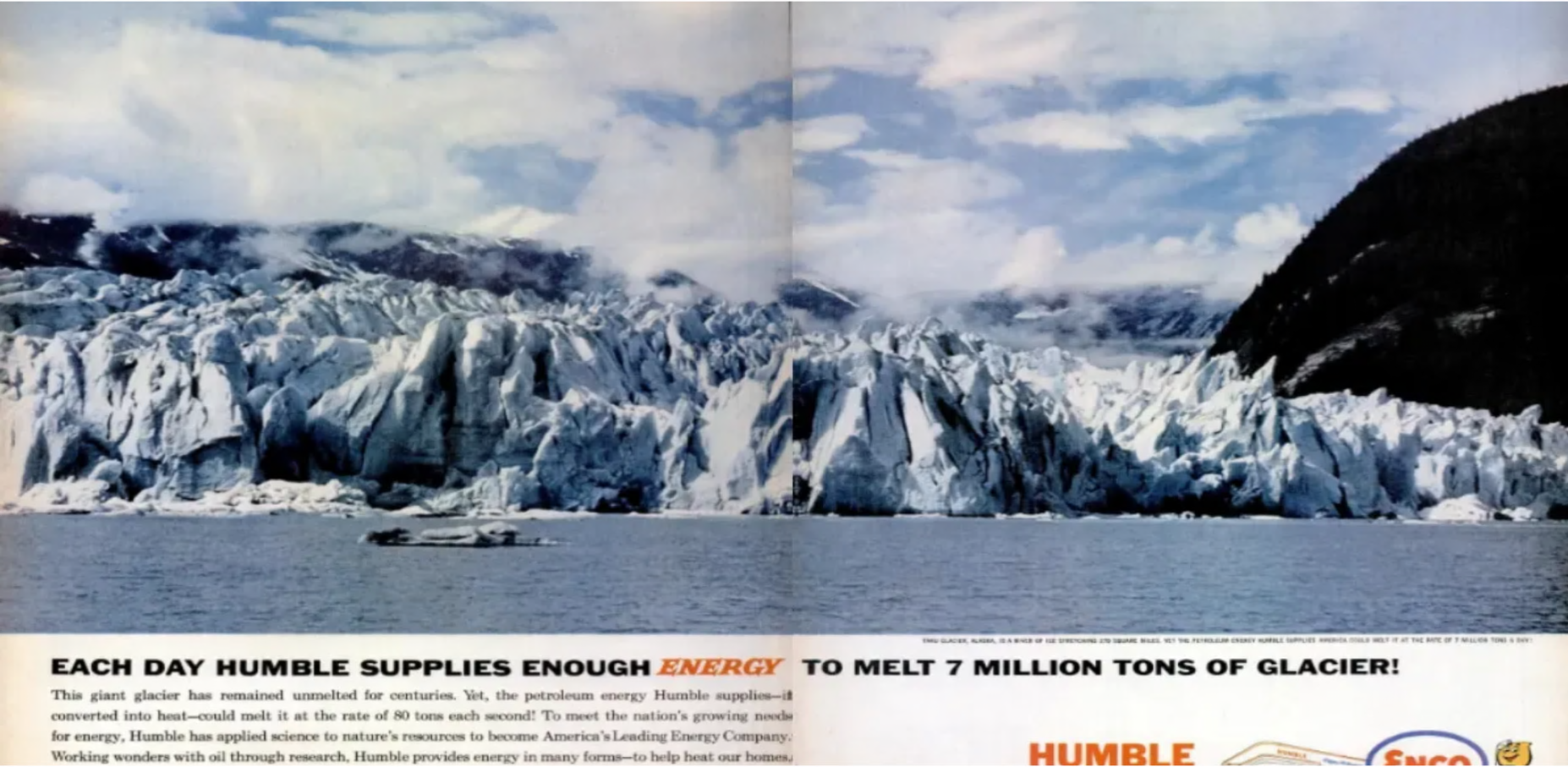
They also call to mind similar efforts by the tobacco industry to downplay the adverse effects of smoking, and by Purdue Pharma and others in the opioid industry to nourish addiction to, and thus promote the widespread use of, their products.
Trump’s Energy Secretary Chris Wright, who made a fortune in the oil and gas industry, wrote in July 2025 that climate change is “not an existential crisis” but simply a “byproduct of progress” that has “modest negative” effects.[201] In other words, as one wag characterized his position, our dependence on fossil fuels is basically immovable and we should all get over it and build seawalls and tolerate much more heat, fires, floods, droughts, and the like.[202]
While Wright emphasized that “nearly every aspect of modern life depends upon energy,”[203] he ignored statistics showing how the link between energy consumption and economic growth has been largely severed.[204] In 2008, for example, the U.S. used about the same amount of energy it used in 1975 but generated twice as much economic activity from it.[205] Between 2007 and 2016, U.S. gross domestic product increased by 12% while total energy consumption fell by 3.6%.[206]
Wright also failed to acknowledge that most aspects of modern life depend upon a reasonably stable climate, and that the great weight of expert opinion is contrary to his assertion that greenhouse gas emissions have only “modest negative effects.” Climate warming is now costing trillions of dollars worldwide annually.[207] And virtually all experts—including many in the business community—believe that addressing climate change is absolutely necessary for economic growth to continue over the longer term.[208]
Nevertheless, while the latest polls suggest that many Americans regard global warming as posing a “serious threat” to them and their way of life, most of them rank climate policy near the bottom of the list of issues that affect how they vote.[209] Moreover, as a headline in a recent New York Times article put it, “Many Fighting Climate Change Worry They are Losing the Information War” as a result of, among other things, relentless online disinformation campaigns and intensive lobbying by fossil fuel interests and their allies.[210] This helps explain why the Trump Administration is not interested in addressing the causes of climate change.
But the facts also suggest that if indifference to greenhouse gas emissions continues to prevail, not only our descendants but also our economy will pay a heavy price over the long run.[211] And so will the nation’s public lands, the wildlife, and other natural features they support.
But despair is not an acceptable course of action, and there is a more optimistic way to think about the climate challenge. Dealing effectively with it requires mustering the political will to decide that society’s collective, long-term interest in leaving future generations a world worth living in should prevail over shorter-term, narrower interests.
The basic theme that emerges from the history of America’s public lands is that, time and time again, America’s political system has done exactly that. It has acted to preserve iconic places for future as well as present generations to enjoy by taking such steps as restoring denuded forest lands and acquiring wildlife habitat to rebuild migratory bird populations. Such efforts have had the added benefit of producing jobs and stimulating an outdoor-recreation-based economy.
All that said, it remains entirely possible that Donald Trump is ending the longstanding trend of protecting more and more lands in public ownership for the general enjoyment of present and future generations. And this may happen even though it seems clear that many people who voted for him in 2024 did not do so with expectation that he would make major changes in public land policy.[212]
A big question is whether defenders of protected public lands can mount an effective national campaign to galvanize the large but ordinarily mostly silent majority that supports strong protections for those lands before many of them become convinced that the U.S. government cannot manage them effectively. Put a little differently, the Trump Administration’s strategy of slashing the budgets and capacity of the agencies managing those lands just might succeed in undermining public support for continuing U.S. ownership.
Ultimately, of course, public land policy is set through the political process. Nothing in the U.S. Constitution says we must have public lands. All it takes is an ordinary act of Congress to transfer every last acre out of U.S. ownership.
What it boils down to is this: each new generation of Americans must effectively decide what it wants to do with these lands. Without political support, the values these lands bring to our way of life can be lost. Their future will be determined largely by how Americans react to the changes now underway.
Will the long-standing, bipartisan consensus on the general direction of public land policy endure, or will it unravel as land management agencies are hollowed out, as climate change takes its toll, and as biodiversity suffers? Will rejecting rather than respecting the teachings of science become the dominant attitude? Will partisan rhetoric intensify, voices become more shrill, and minds become more closed?
Good policy doesn’t just happen; it comes about because people advocate for it, speaking up and engaging in the political process.
And for those skeptical that politics—and particularly politics at the national level—can really make a difference to our daily lives, I would simply say this: cynicism, nihilism, fatalism, and apathy will not alter what is unfolding on a daily basis in our nation’s capital these days. Hope comes from action, rather than the other way around. It is more important than ever for rising generations to engage with the political system that will determine their future, and that includes the future of the public lands.
In his 1961 inaugural address, John Kennedy famously said the “torch has been passed to a new generation of Americans.”[213] But as Denis Hayes, key promoter of the first Earth Day in 1970, once said, “Don’t expect anyone to pass you a torch. Power is an aphrodisiac and no one in power wants to give it up. It is up to you to find it, seize it and carry it to your destiny.”[214]
Engaging with the public lands is a concrete way for people to express what kind of world they want to leave for future generations. Put a little differently, our lives are “not meant to be optimized through a screen, but to be lived.”[215] An important way to do that is by engaging with the natural world—both directly and through involvement in public land policymaking. As Nicholas Kristof recently wrote, while “there’s so much that we Americans are divided about, . . . we should be able to agree on the importance of our generation’s honoring [the] natural inheritance [embodied in our public lands] and recognizing that these are the most democratic spaces we have. On the trail there is no first class or economy; any of us can enjoy camping spots that no billionaire is able to purchase. . . . This is our great heritage to preserve and defend.”[216]
Put a little differently, public lands are examples of what political philosopher Michael Sandel has called “common spaces that gather people from different walks of life,” which he believes are so important in combating what he has described as one of the “most corrosive effects of recent decades;” namely, how “economic inequalities have been translated into social and civic inequalities.” These “class-mixing institutions,” he says, “require that citizens from different backgrounds bump up against one another in the course of their everyday lives,” and in the process “learn to abide [their] differences,” and “come to care for the common good.”[217]
The more people engage with the public lands—and the more the nation continues to adhere to Theodore Roosevelt’s advice, offered as he was leaving office in 1909, to use the public lands “for permanent public good, instead of merely for temporary private gain”[218]—the more likely it is that these lands will continue to supply what President Nixon once aptly called the nation’s “breathing space.”[219]
Even the champion of free-market capitalism, the Scottish philosopher Adam Smith, carved out an important exception when he laid out his case for private ownership of land in his seminal work The Wealth of Nations. A “great and civilized” nation, he wrote, ought to hold lands “for the purposes of pleasure and magnificence” for everyone’s benefit.[220]
Finally, as Daniel L. Reardon has noted, it is worth reminding oneself that while in the long run the pessimists may be proved right, the optimists have more fun along the way![221]
- This essay is drawn from and based largely on the Ruth Wright lecture I delivered at the University of Colorado Law School on October 22, 2025, as well as my article, America’s Public Lands: What Will Donald Trump’s Legacy Be?, 41 J. of Land Use and Envt. L. 2 (Florida State U., 2026). ↑
- See, e.g., Peter Nelson, Demographic Dynamics in Public Lands Counties, 1990-2016, Headwaters Economics (May 7, 2019), https://headwaterseconomics.org/public-lands/papl-nelson/; Headwaters Economics, Protected Lands and Economics: A Summary of Research and Careful Analysis on the Economic Impact of Protected Federal Lands (2017), https://headwaterseconomics.org/wpcontent/uploads/Protected_Lands_Economics.pdf. ↑
- See generally John D. Leshy, Our Common Ground: A History of America’s Public Lands (2022). ↑
- One Big Beautiful Bill Act, Pub. L. 119-21, § 50105, 139 Stat. 72, 143-44 (2025). ↑
- The lands the Lee amendment earmarked for sale are managed by the U.S. Forest Service and the Bureau of Land Management, two of the four federal principal federal land management agencies. As the map shows, the other two are the National Park Service and the U.S. Fish & Wildlife Service. ↑
- See e.g., Maxine Joselow, A Conservative’s Plan to Sell Public Lands Faces MAGA Pushback, N.Y. Times (June 29, 2025), https://www.nytimes.com/2025/06/27/climate/public-lands-sell-off-maga.html [https://perma.cc/TWQ7-ZXKG]. ↑
- Josh Siegel, Lee Pulls Federal Land Sales from Megabill, Politico (June 28, 2025, at 22:14 ET), https://www.politico.com/live-updates/2025/06/28/congress/lee-pulls-federal-land-sales-from-megabill-00431471. ↑
- Colorado College’s State of the Rockies Project has since 2011 polled a cross-section of the public in numerous western states each year asking a variety of questions about public land policy. The results can be found here. Isabel Devito, 2025 Conservation in the West Poll, Colorado College (2025), https://www.coloradocollege.edu/other/stateoftherockies/conservationinthewest/2025.html?utm_source=1500+CWP+List+Daily+Clips+and+Updates&utm_campaign=d431af2579-EMAIL_CAMPAIGN_2025_06_23_03_50&utm_medium=email&utm_term=0_-d431af2579-77300637 [https://perma.cc/6PMA-62Y5] (last visited Oct. 1, 2025). See also https://www.republic.land/politicizing-our-public-lands/?ref=the-good-the-bad-and-the-ugly-newsletter. ↑
- Policy Resolution 2025-09, Recreation and Tourism on Public Lands, W. Governors’ Ass’n (June 23, 2025), https://westgov.org/policy/resolutions-article/policy-resolution-2025-09-recreation-and-tourism-on-public-lands. ↑
- As measured in the federal compendium called Statutes at Large, see Pub. L. 119-21, 139 Stat. 72-401; the OB3 Act provisions are found at pp. 137-152. ↑
- See generally John D. Leshy, Still Made for You and Me? American Scholar (Sep. 14, 2020), https://theamericanscholar.org/still-made-for-you-and-me/; John Leshy, America’s Public Lands: What History Suggests about Their Future, 34 Colo. Envtl. L.J. 1, 20-22 (2023). ↑
- One Big Beautiful Bill Act, § 50101(b)(3); General Oil and Gas Leasing Instructions, U.S. Dep’t of the Interior Bureau of Land Mgmt.: General Leasing, https://www.blm.gov/programs/energy-and-minerals/oil-and-gas/leasing/general-leasing [https://perma.cc/6T2Q-KRD3] (last visited Mar. 18, 2026). ↑
- Emily Denny, Leaders in DC are Selling Off Your Public Lands to Big Oil, Wilderness Soc’y (July 9, 2025), https://www.wilderness.org/articles/press-release/leaders-dc-are-selling-your-public-lands-big-oil; Wilderness Soc’y, Open for Drilling (2025), https://www.wilderness.org/sites/default/files/media/file/Open for Drilling_TWS Report_0.pdf. ↑
- OB3 Act, Pub. L. No. 119-21, § 50101(b)(3), (d)(2), 139 Stat. 72, 137 (2025). ↑
- 30 U.S.C. § 226(e) (2018); Jesse Prentice-Dunn, By the Numbers: Oil Industry Awash in Permits, Leases While Pushing for More Drilling, Ctr. for Western Priorities (Mar. 15, 2022), https://westernpriorities.org/2022/03/by-the-numbers-oil-industry-awash-in-permits-leases-while-pushing-for-more-drilling/. ↑
- Prentice-Dunn, supra note 15. ↑
- Fluid Mineral Leases and Leasing Process, 88 Fed. Reg. 47562 (proposed Jul. 24, 2023), https://www.regulations.gov/document/BLM-2023-0005-0001. ↑
- See generally Beau Kiklis, 6 Ugly Oil and Gas Outcomes From the ‘Beautiful’ Bill, Nat’l Parks Conservation Ass’n (Sep. 30, 2025), https://www.npca.org/articles/10838-6-ugly-oil-and-gas-outcomes-from-the-beautiful-bill. ↑
- OB3 Act § 50101(c)(3); see also Dennis Webb, BLM Sets Special Oil, Gas Lease Sale for Unsold Northwest Colorado Leases, Grand Junction Daily Sentinel (Feb. 5, 2026), https://www.gjsentinel.com/news/western_colorado/blm-sets-special-oil-gas-lease-sale-for-unsold-northwest-colorado-leases/article_1fb3de47-b834-4674-bf7d-1cef5099d8fa.html. ↑
- See generally OB3 Act § 50101; see also Lisa Friedman, Trump Vowed Fewer Regulations and Lots More Oil. He’s Delivered on One., N.Y. Times (Nov. 26, 2025), https://www.nytimes.com/2025/11/26/climate/trump-energy-drilling-inflation.html. ↑
- See infra Part VIII. ↑
- OB3 Act § 50104. ↑
- Maxine Joselow, Trump Opens Pristine Alaska Wilderness to Drilling in Long-Running Feud, N.Y. Times (Oct. 23, 2025), https://www.nytimes.com/2025/10/23/climate/trump-arctic-national-wildlife-refuge-oil-drilling.html?nl=Climate+Forward; Emily Gardner, 1.5 Million Acres of Alaskan Wildlife Refuge to Open for Drilling, Eos (Oct. 23, 2025), https://eos.org/research-and-developments/1-5-million-acres-of-alaskan-wildlife-refuge-to-open-for-drilling; Lois Parshley, Trump Officials Say Alaska is ‘Open for Business.’ So Far, No One’s Buying., Grist (Oct. 31, 2025), https://grist.org/politics/trump-officials-say-alaska-is-open-for-business-so-far-no-ones-buying/?utm_source=1500+CWP+List+Daily+Clips+and+Updates&utm_campaign=43d44b94cc-EMAIL_CAMPAIGN_2025_11_04_04_23&utm_medium=email&utm_term=0_-43d44b94cc-77300637. ↑
- Mark K. DeSantis & Lexie Ryan, Cong. Rsch. Serv., IF13119, National Petroleum Reserve in Alaska (NPR-A): A Summary (2025). ↑
- 42 U.S.C. § 6503(b) (2018). ↑
- H.R. Rep. No. 94-942, at 21 (1976) (Conf. Rep.); see also 42 U.S.C. §§ 6504(a), 6505(b). ↑
- Act of Dec. 12, 1980, Pub. L. No. 96-514, 94 Stat. 2957, 2964 (1980); see also 42 U.S.C. §§ 6504(a), 6505(b). ↑
- See, e.g., Paul L. Flint et al., Prioritizing Habitats Based on Abundance and Distribution of Molting Waterfowl in the Teshekpuk Lake Special Area of the National Petroleum Reserve, Alaska, 38 Glob. Ecology and Conservation (2022), [https://doi.org/10.1016/j.gecco.2022.e02182]; Audubon Alaska, Welcome to Audubon Alaska, https://ak.audubon.org/news/whats-so-special-about-alaskas-special-areas (last visited Mar. 17, 2026); From Leasing to Land Protections, Def. of Wildlife (July 2, 2025), https://storymaps.arcgis.com/stories/bb6a3e9c86ca4c09ab2f5a7929e5b5be. ↑
- DeSantis & Ryan, supra note 24. ↑
- OB3 Act, Pub. L. 111-21 § 50105, 139 Stat. 72, 143-44 (2025); see generally Len Necefer, A Dispatch from America’s First Petroleum Sacrifice Zone, From Arctic Rivers to Capitol Hill, All at Once by Dr. Len (Dec. 10, 2025), https://substack.com/inbox/post/181292011?redirect=app-store-no-desktop&inbox=true&source=post-email-continue-reading-button&triedRedirect=true&utm_source=substack&utm_medium=email; Lynda V. Mapes, A Push for ‘Global Energy Dominance’ Puts Alaskan Wildlands at Risk, Seattle Times (Oct. 11, 2025),
https://www.seattletimes.com/pacific-nw-magazine/a-push-for-global-energy-dominance-has-put-an-alaskan-wilderness-at-risk/?utm_source=1500+CWP+List+Daily+Clips+and+Updates&utm_campaign=c3d8e73da2-EMAIL_CAMPAIGN_2025_10_15_09_59&utm_medium=email&utm_term=0_-c3d8e73da2-77300637. ↑
- OB3 § 50102(a). ↑
- See generally Heather Richards, The New NIMBY: Not in My Ocean, Politico (Nov. 11, 2025, at 18:36 EST), https://www.politico.com/newsletters/power-switch/2025/11/03/the-new-nimby-not-in-my-ocean-00633221; see also Ben Lefebvre, Trump Targets Atlantic and Pacific Coasts for New Oil Drilling, Politico (Oct. 22, 2025, at 22:53 EDT), https://www.politico.com/news/2025/10/22/trump-targets-atlantic-and-pacific-coasts-for-new-oil-drilling-00619492. ↑
- Garrett Downs, Florida Republicans Rebel Against Plan to Drill in Eastern Gulf, E&E News (Nov. 21, 2025, at 6:39 EST), https://www.eenews.net/articles/florida-republicans-rebel-against-plan-to-drill-in-eastern-gulf. ↑
- OB3 §§ 50101(a) (onshore), 50102(d) (offshore). ↑
- Friedman supra note 20. ↑
- See, e.g., By the Numbers: Federal Onshore Oil and Gas Leasing Revenue Loss, Taxpayers for Common Sense, https://www.taxpayer.net/by-the-numbers-federal-onshore-oil-and-gas-leasing-revenue-loss/ (last visited, Apr. 14, 2026). ↑
- 30 U.S.C. § 191. ↑
- Id. at §§ 502-03; see 30 U.S.C § 201. ↑
- Interior Unleashes American Coal Power In Bold Move To Advance Trump Administration Priorities, Bureau of Land Mgmt. (Sept. 29, 2025), https://www.blm.gov/press-release/interior-unleashes-american-coal-power-bold-move-advance-trump-administration [https://perma.cc/JA28-M4BM]; Timothy Gardner, Trump Administration to Expand Coal Leasing, Fund Coal Plant Upgrades, Reuters (Sep. 29,2025, at 12:56 ET), https://www.reuters.com/sustainability/climate-energy/trump-officials-announce-plan-boost-coal-output-2025-09-29/ [https://perma.cc/49KA-7P2J]. ↑
- H.R.1 §§ 50301(a)(2)(3), 50301(b)(2)(3). ↑
- Id. ↑
- Eric Biber, Reconciliation and Public Lands Part 2, Legal Planet (Sept. 9, 2025), https://legal-planet.org/2025/09/09/reconciliation-and-public-lands-part-2/. ↑
- See, e.g., Travis D. Stice, Letter to Stockholders Issued by Diamondback Energy, Inc., Diamondback Energy (May 5, 2025), https://www.diamondbackenergy.com/news-releases/news-release-details/letter-stockholders-issued-diamondback-energy-inc-7 [https://perma.cc/T9MS-VA3D]; but see Mary Cunningham, Trump Administration Fast-Tracks Oil and Mining Projects, Angering Environmentalists, CBS News (Apr. 5, 2025, 13:20 ET), https://www.cbsnews.com/news/trump-drilling-mining-permitting-process-shortened/ [https://perma.cc/GNZ9-HPP2]. ↑
- About the BLM Oil and Gas Program, Bureau of land Mgmt., https://www.blm.gov/programs/energy-and-minerals/oil-and-gas/about (last visited Apr. 14, 2026); Open for Business (and not much else): Analysis Shows Oil and Gas Leasing out of Whack on BLM Lands, The Wilderness Soc’y, https://www.wilderness.org/articles/article/open-business-and-not-much-else-analysis-shows-oil-and-gas-leasing-out-whack-blm-lands (last visited Apr. 14, 2026). ↑
- Mike Koshmrl, Drilling Lease Slated 2 Miles from World’s Largest Sage Grouse Lek, Center Punching Planet’s Longest Mule Deer Migration, WyoFile (Nov. 14, 2025), https://wyofile.com/drilling-lease-slated-2-miles-from-worlds-largest-sage-grouse-lek-center-punching-planets-longest-mule-deer-migration/?utm_source=1500+CWP+List+Daily+Clips+and+Updates&utm_campaign=e22c05f973-EMAIL_CAMPAIGN_2025_11_18_10_58&utm_medium=email&utm_term=0_-e22c05f973-77300637; Alysha Lundgren, Interior Opens Lands Adjacent to Zion, Other National Parks to Coal Leasing, St. George News (Nov. 2, 2025), https://www.stgeorgeutah.com/news/interior-opens-lands-adjacent-to-zion-other-national-parks-to-coal-leasing/article_1ef2fb92-cbf3-47b0-a994-0c79f31a9ddb.html?utm_source=1500+CWP+List+Daily+Clips+and+Updates&utm_campaign=1a409eabdb-EMAIL_CAMPAIGN_2025_11_02_11_39&utm_medium=email&utm_term=0_-1a409eabdb-77300637; https://www.jhnewsandguide.com/jackson_hole_daily/state_and_regional/energy-dominance-meets-migration-all-wyoming-corridors-overlap-with-proposed-oil-and-gas-leases/article_91207d7e-b409-4ea2-ab42-ee1c3ee58fdc.html; Mike Koshmrl, Proposed Wyoming Oil and Gas Leases Overlap Wildlife Corridors, HighCountryNews (Oct. 29, 2025), https://www.hcn.org/articles/proposed-wyoming-oil-and-gas-leases-overlap-wildlife-corridors/?utm_source=wcn1&utm_medium=email&utm_campaign=2025-10-31-Newsletter [https://perma.cc/GG6D-SQP4]. ↑
- See Leshy, supra note 3, at 573. ↑
- Blackfeet Nation, All Oil and Gas Leases Have Been Canceled in the Badger-Two Medicine, https://blackfeetnation.com/badger-two-medicine/cancel-the-last-oil-and-gas-lease/ (last visited Apr. 14, 2026). ↑
- Id.; Leshy, supra note 3, at 560, 573; Laura Lundquist, Final Oil Lease Retired in the Badger Two Medicine Area, Missoula Current (Sept. 5, 2023), https://missoulacurrent.com/oil-lease-retired/. ↑
- Christ Stiffler, How the Interior Department’s rollback turns abandoned oil wells into your problem, Colo. Newsline (Nov. 24, 2025, 3:30 AM), https://coloradonewsline.com/2025/11/24/interior-departments-abandoned-oil-wells/. ↑
- See, e.g., Alan Zibel, Poisoned Wells: U.S. Taxpayers Could Be on Hook for Up to $18 Billion Well Cleanup Shortfall, Public Citizen (Dec. 5, 2023), https://www.citizen.org/article/poisoned-wells-u-s-taxpayers-could-be-on-hook-for-up-to-18-billion-well-cleanup-shortfall/; see also, A Growing Risk on Public Lands, Nat’l Wildlife Fed’n, https://www.nwf.org/-/media/Documents/PDFs/Press-Releases/2025/A-Growing-Risk-on-Public-Lands?utm_source=1500+CWP+List+Daily+Clips+and+Updates&utm_campaign=1a409eabdb-EMAIL_CAMPAIGN_2025_11_02_11_39&utm_medium=email&utm_term=0_-1a409eabdb-77300637. ↑
- Conservatives for Responsible Stewardship, Unplugged: The High Cost of Bonding Reform Rollbacks, https://www.conservativestewards.org/crs-bonding-report/?utm_source=1500+CWP+List+Daily+Clips+and+Updates&utm_campaign=df05dd5ff7-EMAIL_CAMPAIGN_2025_11_20_10_23&utm_medium=email&utm_term=0_-df05dd5ff7-77300637. ↑
- See, e.g., What Government Affairs Teams Need to Know (and Do) About the One Big Beautiful Bill Act, Bloomberg Gov’t. (Sept. 30, 2025), https://about.bgov.com/insights/federal-policy/guide-to-the-one-big-beautiful-bill/; One Big Beautiful Bill Act, Wikipedia, https://en.wikipedia.org/wiki/One_Big_Beautiful_Bill_Act (last visited Apr. 14, 2026). ↑
- Bill Chappell, How ICE grew to be the highest-funded U.S. law enforcement agency, NPR (Jan. 21, 2026, 5:00 AM EST), https://www.npr.org/2026/01/21/nx-s1-5674887/ice-budget-funding-congress-trump. ↑
- The One, Big, Beautiful Bill Act – Summary and Analysis, Brownstein Law Firm Client Alert (July 8, 2025), https://www.bhfs.com/wp-content/uploads/2025/07/OBBBA-Summary-and-Analysis.pdf. ↑
- See, e.g., Phillip Wallach, Degraded Deliberation in the U.S. House, Am. Enter. Inst. (Jan. 7, 2025), https://www.aei.org/op-eds/degraded-deliberation-in-the-u-s-house/. ↑
- See, e.g., Michael Li, Gerrymandering Explained, Brennan Ctr. for Justice (August 9, 2025), https://www.brennancenter.org/our-work/research-reports/gerrymandering-explained; Dana Bash, Ethan Cohen, & Abbie Sharp, How Gerrymandering Makes the US House Intensely Partisan, CNN (Jan. 25, 2022, 14:33 EST), https://www.cnn.com/2022/01/25/politics/gerrymandering-us-house-partisan. ↑
- See, e.g., Nic Newman, Journalism, Media, and Technology Trends and Predictions 2025, Reuters Inst. (Jan. 9, 2025), https://reutersinstitute.politics.ox.ac.uk/journalism-media-and-technology-trends-and-predictions-2025. ↑
- In a Meet the Press interview with Chuck Todd on January 22, 2017, Conway defended White House Press Secretary Sean Spicer’s false statement about the attendance numbers at Trump’s first inaugural. Video posted by Meet the Press (@MeetThePress), X, “Alternative facts are not facts. They are falsehoods,” Chuck Todd tells Pres. Trump’s counselor Kellyanne Conway this morning. WATCH: (Jan. 22, 2017, at 10:03 ET), https://x.com/MeetThePress/status/823184384559878144 [https://perma.cc/FSB8-M38W]. When Todd pressed her to explain why Spicer would “utter a provable falsehood,” Id. at 00:20-00:22, Conway stated that Spicer was giving “alternative facts.” Id. at 02:02-02:03. Todd responded, “Look, alternative facts are not facts. They’re falsehoods.” Id. at 02:14-02:17. Conway’s use of the phrase “alternative facts” for demonstrable falsehoods was widely mocked on social media, sharply criticized by journalists and media organizations, and became the quote of the year in the Yale Book of Quotations. E.g., “Alternative Facts” Tops This Year’s List of Notable Quotes, CBS News (Dec. 12, 2017, at 17:54 EST), https://www.cbsnews.com/news/alternative-facts-tops-the-yale-book-of-quotations/ [https://perma.cc/VE6Y-VSA9]; Justin Green, Today’s Top Quote: Kellyanne on “Alternative Facts”, Axios (Jan. 22, 2017), https://www.axios.com/2017/12/15/todays-top-quote-kellyanne-on-alternative-facts-1513300040. ↑
- Kimiko de Freytas-Tamura, George Orwell’s ‘1984’ Is Suddenly a Best-Seller, N.Y. Times (Jan. 25, 2017), https://www.nytimes.com/2017/01/25/books/1984-george-orwell-donald-trump.html [https://perma.cc/R7YJ-J3JE]. ↑
- See, e.g., P.B.S., Meta Says it will Follow X, Replaces Fact-checking with Community Notes (Jan. 7, 2025, 10:30 AM EDT), https://www.pbs.org/newshour/nation/meta-says-it-will-follow-x-replace-fact-checking-with-community-notes. ↑
- George Packer, The End of Democratic Delusions, The Atlantic (Dec. 2, 2024), https://www.theatlantic.com/magazine/archive/2025/01/trump-reelection-voter-demographic-change/680752/. ↑
- Aaron Zamost, I Worked All Over Silicon Valley: This Is How It Lost Its Spine, N.Y. Times (Nov. 12, 2025), https://www.nytimes.com/2025/11/12/opinion/silicon-valley-meta-apple-trump.html. ↑
- See, e.g., Alec Tyson, Public Trust in Scientists and Views on Their Role in Policymaking, Pew Rsch. Ctr. (Nov. 14, 2024), https://www.pewresearch.org/science/2024/11/14/public-trust-in-scientists-and-views-on-their-role-in-policymaking/; Manjana Milkoreit, Sage Choice, Rapidly diverging public trust in science in the United States, https://pmc.ncbi.nlm.nih.gov/articles/PMC12177194/. ↑
- Bd. of Governors of the Fed. Rsrv. Sys., Share of Net Worth Held by the Top 0.1% (Jan. 16, 2026, 1:34 PM CST), https://fred.stlouisfed.org/series/WFRBSTP1300 [https://perma.cc/X7PB-ZNSD]. ↑
- See, e.g., Licia Bobzien, Income Inequality and Political Trust: Do Fairness Perceptions Matter?, Social Indicators Research, 505 (2023), https://link.springer.com/article/10.1007/s11205-023-03168-9. ↑
- See, e.g., Scott Neuman, Here are 6 ‘Beautiful Bill’ Tax Changes that will Benefit Wealthy Americans, NPR (Nov. 5, 2025, 5:00 AM EST), https://www.npr.org/2025/11/05/nx-s1-5590112/trump-beautiful-bill-taxes-republican-rich-wealthy. ↑
- Citizens United v. FEC, 558 U.S. 310 (2010). ↑
- Id. ↑
- SpeechNow.org v. FEC, 599 F.3d 686 (D.C. Cir., 2010) (en banc); see generally Beth Reinhard, A Case that lets Billionaires Spend Big on Elections Never Reached Supreme Court, The Wash. Post (Dec. 1, 2025), https://www.washingtonpost.com/politics/2025/12/01/speechnow-fec-citizens-united-super-pacs/. ↑
- McCutcheon v. FEC, 512 U.S. 185 (2014). ↑
- Reinhard, supra note 69; see also 15 Years of Citizens United: How Big Money Dominated the 2024 Election, Campaign Legal Ctr. (Jan. 16, 2025), https://campaignlegal.org/events/15-years-citizens-united-how-big-money-dominated-2024-election [https://perma.cc/3AUL-2AJW]. ↑
- Rucho v. Common Cause, 588 U.S. 684, 721-22 (2019). ↑
- See Abbott v. League of United Latin Am. Citizens, 146 S.Ct. 418 (2025);
Amy Howe, Supreme Court Allows Texas to Use Redistricting Map Challenged as Racially Discriminatory, SCOTUSblog (Dec. 4, 2025), https://www.scotusblog.com/2025/12/supreme-court-allows-texas-to-use-redistricting-map-challenged-as-racially-discriminatory/. ↑
- Trump v. United States, 603 U.S. 593, 609 (2024). ↑
- See, e.g., Peter Baker, Trump Signals a ‘Seismic Shift,’ Shocking the Washington Establishment, N.Y. Times (Nov. 17, 2024), https://www.nytimes.com/2024/11/17/us/politics/trump-signals-a-seismic-shift-shocking-the-washington-establishment.html; Shalev Gad Roisman, President Trump in the Era of Exclusive Powers, Harv. L. Rev. Exec. Power Blog (Apr. 12, 2025), https://harvardlawreview.org/blog/2025/04/president-trump-in-the-era-of-exclusive-powers/; Jim VandeHei & Mike Allen, Behind the Curtain: Unprecedented New Precedents, Axios (Jun. 28, 2025) https://www.axios.com/2025/06/28/trump-precedents-executive-power?utm_source=newsletter&utm_medium=email&utm_campaign=newsletter_axiosam&stream=top. ↑
- See, e.g., Drew McConville et al., The Trump Administration’s Expansive Push to Sell Out Public Lands to the Highest Bidder, CAP (Sep. 22, 2025), https://www.americanprogress.org/article/the-trump-administrations-expansive-push-to-sell-out-public-lands-to-the-highest-bidder/. ↑
- See, e.g., Ben Lefebvre, Trump Pressed Oil Executives to Give $1 Billion For His Campaign, People in Industry Say, Politico (May 9, 2024, at 7:29 ET), https://www.politico.com/news/2024/05/09/trump-asks-oil-executives-campaign-finance-00157131; ClimatePower, NEW REPORT: Oil and Gas Industry Spent $450 Million to Influence Trump and the 119th Congress (Jan. 22, 2025), https://climatepower.us/news/new-report-oil-and-gas-industry-spent-450-million-to-influence-trump-and-the-119th-congress/. ↑
- Benoît Morenne & Josh Dawsey, Oil Tycoons Bet Big on Trump. It’s Paying Off., Wall St. J. (Sep. 7, 2025, 21:00 ET), https://www.wsj.com/politics/policy/trump-oil-industry-executives-policies-85eb74e6?gaa_at=eafs&gaa_n=AWEtsqf5YrnJzFPu9o_4eSXjVW-uPpMvy6S9fyP1DFwecmXa7ZKLWD8wkgtyAa465QQ=&gaa_ts=691a5723&gaa_sig=D8mSk2oEVeHY53O126g2Y3DR4019pE-rp3Cl-Bm1JfkdAXOgacrAVoDej_URzQmy4hujn5UvlCxCTOpftaZqvQ==. ↑
- The White House, President Trump’s One Big Beautiful Bill Is Now the Law (July 4, 2025), https://www.whitehouse.gov/articles/2025/07/president-trumps-one-big-beautiful-bill-is-now-the-law/. ↑
- Ember, Fossil Fuels Fall Below 50% Of US Electricity for the First Month on Record (Apr. 4, 2025), https://ember-energy.org/latest-updates/fossil-fuels-fall-below-50-of-us-electricity-for-the-first-month-on-record/. ↑
- The first chart also shows how these trends generally followed U.S. population growth. A few notes of caution: the acreage figures here do not include submerged lands off the nation’s coasts, nor do they include acreage where the U.S. owns only the mineral rights and not the land surface. Also, considerable judgment had to be employed in determining these acreage figures, so the charts should be understood as providing a general lay of the land rather than precision. ↑
- See, e.g., Derek Thompson, The Story of the Gilded Age Wasn’t Wealth. It Was Corruption., The Atlantic (Apr. 3, 2025), https://www.theatlantic.com/ideas/archive/2025/04/history-rich-influence-government/682266/. ↑
- H.W. Brands, American Colossus: The Triumph of Capitalism, 1865-1900 286 (2010). ↑
- See, e.g., New America, Where We Have Been: The History of Gerrymandering in America,
https://www.newamerica.org/insights/what-we-know-about-redistricting-and-redistricting-reform/where-we-have-been-the-history-of-gerrymandering-in-america/ (last visited Apr. 14, 2026). ↑
- Leshy, supra note 3, at 3, 36–37, 54, 89, 108, 144–45, 290-91, 302–03, 565–66, 572. ↑
- See generally id. at 85–213. ↑
- See generally id. at 563–74; John D. Leshy, Public Lands and Native Americans: A Guide to Current Issues, Public L. & Res. L. Rev., Jun. 24, 2024 at 1–33. ↑
- 30 U.S.C.S. § 21 (2026); see generally John D. Leshy, The Mining Law: A Study in Perpetual Motion (1987). ↑
- Unless otherwise noted, the material on Stewart in the next few paragraphs is drawn from Leshy, supra note 3, at 93–96, 191, which has references for the quotations. See also Leshy, supra note 86, at 15, 21–22, 94, 386–87. ↑
- Leshy, supra note 3, at 92–96; Jerome Edwards, William Stewart, ONE (Nov. 3, 2010), http://www.onv-dev.duffion.com/articles/william-stewart. ↑
- Dupont Circle Revisited: A Walker’s Tour, The L’Enfant Trust, 8 (3rd prtg. 2003) https://1728condo.wordpress.com/wp-content/uploads/2016/04/11-dupont-walking-tour-guide-includes-several-clarke-waggaman-homes.pdf (internal quotations omitted). ↑
- Shortly afterward, Twain memorialized his tenure with Stewart in a political satire that is still funny today. Leshy, supra note 3, at 94. ↑
- Id. at 14–15. ↑
- George W. Julian, Political Recollections,1840-1872 289, 297 (1884). ↑
- Dan Plazak, A Hole in the Ground With a Liar at the Top 61–77 (2006); Russell R. Elliott, Servant of Power: A Political Biography of Senator William M. Stewart 138 (1983). ↑
- Elliott, supra note 95. ↑
- Leshy, supra note 3, at 191. ↑
- Wallace Stegner, Beyond the Hundredth Meridian 304 (1954). ↑
- See, e.g., Jeff Burbank, William A. Clark, ONE (Sep. 29, 2010), http://www.onv-dev.duffion.com/articles/william-clark. ↑
- Wikipedia, William A. Clark, https://en.wikipedia.org/wiki/William_A._Clark (last visited Mar. 6, 2026); Wikipedia, Stewart’s Castle, https://en.wikipedia.org/wiki/Stewart%27s_Castle (last visited Mar. 6, 2026). ↑
- Michael P. Malone, The Battle for Butte: Mining and Politics on the Northern Frontier 1864-1906 199 (1981). ↑
- Leshy, supra note 3, at 275 (internal quotations omitted); see also Keith Edgerton, William Clark, The Copper King, The Mont. Professor (Spring 2014), https://mtprof.msun.edu/Spr2014/edger.html. ↑
- Robert L. Heilbroner, What Has Posterity Ever Done for Me?, N.Y. Times (Jan. 19,1975), https://www.nytimes.com/1975/01/19/archives/what-has-posterity-ever-done-for-me.html. ↑
- See, e.g., William deBuys, It’s the Mentality, Stupid, Tom Dispatch (June 26, 2025), https://tomdispatch.com/republicans-and-climate-change/; Matthew Rose, Intergenerational Report Fails at First Hurdle – Ignores Climate Change, Renew Econ. (Mar. 5, 2015), https://reneweconomy.com.au/intergenerational-report-fails-at-first-hurdle-ignores-climate-change-51863/. ↑
- David Wallace-Wells, Trump’s Budget Tells Three Unhappy Truths About America, N.Y. Times (June 11, 2025), https://www.nytimes.com/2025/06/11/opinion/budget-trump.html; see also Arian Campo-Flores, The Ultrarich Are Spending a Fortune to Live in Extreme Privacy, Wall St. J. (Nov. 15, 2025, 20:00 ET), https://www.wsj.com/lifestyle/travel/the-ultrarich-are-spending-a-fortune-to-live-in-extreme-privacy-3f400e55?gaa_at=eafs&gaa_n=AWEtsqc4qlLboeDfSjWffwWJxuTdlDB-5Ku3fVn4J1kcA-A0ld7BsYj0ulBL&gaa_ts=69ab9b39&gaa_sig=ycXndwEkRg7I4wNzmIiF9G8NcjkJRcPW8dkxt3FpG8RragfxiBq_WYFfOLThknkPfm5FU8MIzDYHT_z6RTEobQ%3D%3D. ↑
- Sarah McCammon, How Empathy Came to Be Seen as a Weakness in Conservative Circles, NPR (Mar. 22, 2025, 8:05 ET), https://www.npr.org/2025/03/22/nx-s1-5321299/how-empathy-came-to-be-seen-as-a-weakness-in-conservative-circles?utm_source=substack&utm_medium=email. ↑
- Margherita Stancati et al., Pope Leo Takes on AI as a Potential Threat to Humanity, Wall St. J. (June 17,2025 2:00 ET), https://www.wsj.com/tech/ai/pope-leo-ai-tech-771cca48?mod=hp_lead_pos7%20%5Bhttps://perma.cc/P2KU-RR24arich-are-spending-a-fortune-to-live-in-extreme-privacy-3f400e55?gaa_at=eafs; Vatican News, Biography of Pope Leo XIV, Born Robert Francis Prevost (May 8, 2025), https://www.vaticannews.va/en/pope/news/2025-05/biography-of-robert-francis-prevost-pope-leo-xiv.html. /9U9F-QD5D]. ↑
- See text accompanying notes 56, 73 and 82, supra. ↑
- Zachary Basu, Trump Invites America’s Wealthiest to Fund His Presidency, Axios (Dec. 3, 2025), https://www.axios.com/2025/12/03/trump-accounts-donors-billionaires?utm_source=newsletter&utm_medium=email&utm_campaign=newsletter_axiosam&stream=top. ↑
- Fareed Zakaria, Populists are Replacing Meritocracy with Something Far Worse, Wash. Post (Dec. 5, 2025), https://www.washingtonpost.com/opinions/2025/12/05/trump-plutocrat-meritocracy-experts/; Karen Yourish et al., Hundreds of Big Post-Election Donors Have Benefited from Trump’s Return to Office, N.Y. Times (Dec. 22, 2025), https://www.nytimes.com/interactive/2025/12/22/us/politics/trump-donors-fundraising-benefits.html?smid=nytcore-ios-share. ↑
- See, e.g., Will Weissert, Trump Has Touted Gilded Age Tariffs, an Era Which Saw Industrial Growth Together with Poverty, PBS (Mar. 10, 2025), https://www.pbs.org/newshour/politics/trump-has-touted-gilded-age-tariffs-an-era-which-saw-industrial-growth-together-with-poverty. ↑
- Id. ↑
- Elisabeth Bumiller, A Trump Oligarchy is Moving to Washington, and Buying Up Prime Addresses, N.Y. Times (Jan. 19, 2025), https://www.nytimes.com/2025/01/19/us/politics/trump-billionaires-washington-homes.html. ↑
- See text accompanying Joselow, supra note 6; Siegel, supra note 7. ↑
- Jake Bolster et.al., Western States Brace for a Uranium Boom as the Nation Looks to Recharge its Nuclear Power Industry, Inside Climate News (Nov. 2, 2025), https://insideclimatenews.org/news/02112025/west-braces-for-uranium-boom-as-nuclear-makes-comeback/. ↑
- House Passes Amodei’s Bill to Strengthen Domestic Mineral Supply Chain, Mark Amodei News Releases (Dec. 18, 2025), https://amodei.house.gov/news-releases/house-passes-amodeis-bill-strengthen-domestic-mineral-supply-chain. ↑
- Kyle Mullins, Just How Rich is GOP Presidential Candidate Doug Burgum?, Forbes (Nov. 8, 2023), https://www.forbes.com/sites/kylemullins/2024/11/15/just-how-rich-is-gop-presidential-candidate-doug-burgum/. ↑
- The Monetization of Public Lands, Wildlife News (Mar. 3, 2025), https://www.thewildlifenews.com/2025/03/03/the-monetization-of-public-lands/; Heather Richards, 4 things to know about Doug Burgum’s ‘balance sheet’ pitch, E&E NEWS (April 25, 2025, 1:43 PM EDT), https://www.eenews.net/articles/4-things-to-know-about-doug-burgums-balance-sheet-pitch/. ↑
- Aaron Weiss, Trump’s Interior Nominee has an Oil Billionaire Benefactor, Ctr. For Western Priorities (Jan. 14, 2025), https://westernpriorities.org/2025/01/trumps-interior-nominee-has-an-oil-billionaire-benefactor/; see also Eric Litpton & Rebecca F. Elliot, The Oilman Who Pushed Trump to Go All in on Fossil Fuels, N.Y. Times (Dec. 12, 2025), https://www.nytimes.com/2025/12/12/business/energy-environment/trump-harold-hamm-oil-gas.html. ↑
- Abraham Lustgarten, The Doublespeak of Energy Secretary Chris Wright, ProPublica (Mar. 24, 2025), https://www.propublica.org/article/energy-secretary-chris-wright-climate-change-double-speak-oil-gas-trump. ↑
- Hiroko Tabuchi, Trump’s Pick to Run the Forest Service Has a History with the Agency, N.Y. Times (June 3, 2025), https://www.nytimes.com/2025/06/03/climate/michael-boren-forest-service-nomination.html (https://perma.cc/465F-MGS2); PN13-1 – Nomination of Michael Boren for Dept. of Ag., 119th Cong. (2025-2026), PN13-1, 119th Cong. (2025), https://www.congress.gov/nomination/119th-congress/13/1. ↑
- Patrick Lohman, Trump Nominates Former NM GOP Congressman Steve Pearce to Lead Federal Public Lands Agency, Source NM (Nov. 5, 2025), https://sourcenm.com/briefs/trump-nominates-former-nm-gop-congressman-steve-pearce-to-lead-federal-public-lands-agency/; Patrick M. Brenner, New Mexico Knows Trump’s BLM Nominee. Back Away., Wash. Post (Nov. 18, 2025), https://www.washingtonpost.com/opinions/2025/11/18/trump-nominee-pearce-bureau-land-management/; Jimmy Tobias, He Once Pushed to Divest Federal Lands. Now He’s Trump’s BLM Nominee, Pub. Domain (Nov. 13, 2025),https://www.publicdomain.media/p/trump-blm-oil-money-sell-public-land?utm_source=post-email-title&publication_id=4006545&post_id=178794890&utm_campaign=email-post-title&isFreemail=true&r=2ytx6b&triedRedirect=true&utm_medium=email; Kiley Price, Conservation Groups Blast Trump’s Latest Choice to Head Up the Bureau of Land Management, Inside Climate News (Nov. 6, 2025), https://insideclimatenews.org/news/06112025/steve-pearce-trump-bureau-of-land-management-nomination/. ↑
- See, e.g., The Landscape, Ryan Busse on How Billionaires are Locking Up Land in Montana, Ctr. for Western Priorities (04:35), https://westernpriorities.org/2025/09/ryan-busse-on-how-billionaires-are-buying-up-montana-and-blocking-access-to-public-land/. ↑
- Iron Bar Holdings, LLC v. Cape, 674 F. Supp. 3d 1059, 1064 (D. Wyo. 2023), aff’d, 131 F.4th 1153 (10th Cir. 2025), cert. denied 146 S.Ct. 327 (2025) (lower courts rejected his lawsuit and the Supreme Court recently denied review). ↑
- 43 U.S.C. §1061 (1885). ↑
- See, e.g., Mike Koshmrl, A Wyoming Man Can Legally Reach His Land, But a Lawsuit Contends He Can’t Stop to Hunt Public Land Along the Way, WyoFile (Dec. 8, 2025), https://wyofile.com/a-wyoming-man-can-legally-reach-his-land-but-a-lawsuit-contends-he-cant-stop-to-hunt-public-land-along-the-way/; Nicole Blanchard, Texas Billionaire Brothers Block Another Idaho Road, Prompting Criticism Over Public Access, Idaho Statesman (June 12, 2019), https://www.idahostatesman.com/outdoors/article231467743.html (https://perma.cc/8TT2-TLZH) ; see also Ben Ryder Howe, To Buy a Mountain Range, N.Y. Mag (Oct. 23, 2024), https://nymag.com/intelligencer/article/yellowstone-club-real-estate-public-land-montana-crazy-mountains.html. ↑
- Phil Taylor, Park Service Finds Nemesis in Colorado Mansion Developer, N.Y. Times (Apr. 30, 2010), https://archive.nytimes.com/www.nytimes.com/gwire/2010/04/30/30greenwire-park-service-finds-nemesis-in-colo-mansion-dev-23573.html (describing an attempt by Thomas Chapman, who bought an inholding in a national park for $250,000, to persuade the Park Service to pay him $14 million for it by threatening to build a mega-mansion on it); see also Kelley McMillan, Backcountry Monopoly, Outside Mag. (Nov. 29, 2011), https://perma.cc/5XSE-HHHC (describing a similar gambit by Chapman involving a proposed exchange of national forest land); And see generally Kellen Zale, Inholdings, 46 Harvard Env’t L. Rev. 439, 457-459 (2022).https://ssrn.com/abstract=3900082 ↑
- Theodore Schleifer, Koch Political Operation Spent Nearly $550 Million During 2024 Cycle, N.Y. Times (Dec. 20, 2025), https://www.nytimes.com/2025/12/20/us/politics/koch-network-2024-election-trump.html?smid=nytcore-ios-share. ↑
- Forbes Global Properties Staff, Rupert Murdoch Buys Koch Family Ranch in Montana for $200 Million, Forbes Glob. Properties, https://www.forbesglobalproperties.com/insights/rupert-murdoch-buys-koch-family-ranch-in-montana-for-200-million (https://perma.cc/AS5X-PBNG); E.B. Solomont & Candace Taylor, Rupert Murdoch Buys $200 Million Montana Ranch from the Koch Family, Wall St. J. (Dec. 9, 2021), https://www.wsj.com/real-estate/luxury-homes/rupert-murdoch-buys-200-million-montana-ranch-from-the-koch-family-11639065752?mod=hp_trending_now_article_pos1 (https://perma.cc/SM3B-CTDM). ↑
- John Leshy & Molly McUsic, Where’s the Beef, Facilitating Voluntary Retirement of Federal Lands from Livestock Grazing, 17 N.Y.U. ENV’T L. J. 368, 371 n. 11 (2008); Bradley J. Gentner & John A. Tanaka, C1assifying Federal Public Land Grazing Permittees, 55 J. RANGE MGMT. 2, 8 (2002); see also E. Tom Bartlett et al., Valuing Grazing Use on Public Land, 55 J. RANGE MGMT. 426, 426 (2002). ↑
- The Editorial Board, America’s Big, Beautiful Land Sale, Wall Street J. (June 19, 2025), https://www.wsj.com/opinion/federal-land-sale-congress-tax-bill-mike-lee-ryan-zinke-e3e4837f?gaa_at=eafs&gaa_n=AWEtsqcOsUFEv7Y7Kd1qFqZWcvfkt32Ulq0cM9wcMWWCfO3tCUmqQlDloeKbxaCtdU4=&gaa_ts=691baa9e&gaa_sig=VLC260_3yGudl0ljFYBKx2M5wTHhFx0aZgNSsr_-tabUxddEf9PHroHrHMFE_vZZGF2knca5Q_X_vEHq8jTZlw==. ↑
- Mark Olalde & Jimmy Tobias, The Wealthy Profit from Public Lands, and Taxpayers Pick Up the Tab, High Country News (Dec. 1, 2025), https://www.hcn.org/issues/57-12/the-wealthy-profit-from-public-lands-and-taxpayers-pick-up-the-tab/; Mark Olalde et. al, Congress Made it Easier to Ignore Grazings Harm to Public Lands, High Country News (Dec 2, 2025), https://www.hcn.org/issues/57-12/congress-made-it-easier-to-ignore-grazings-harm-to-public-lands/; Mark Olalde & Jimmy Tobias, How Ranchers Accused of Breaking the Rules Dodge Oversight, High Country News (Dec. 3, 2025), https://www.hcn.org/issues/57-12/how-ranchers-accused-of-breaking-the-rules-dodge-oversight/; Mark Olalde et. al., How We Reported Free Range, Our Grazing Investigation, High Country News (Dec. 1, 2025), https://www.hcn.org/issues/57-12/how-we-reported-free-range-our-grazing-investigation/; Jeffrey D. Burgess, Livestock Forage Disaster Program A Disaster for Taxpayers, AZ Grazing Clearhouse (Dec. 4, 2019), https://azgrazingclearinghouse.org/livestock-forage-disaster-program/. ↑
- Hannah Northey, Inside Trump’s Foray into Mineral Ownership, E&E News (Oct. 8, 2025), https://www.eenews.net/articles/inside-trumps-foray-into-mineral-ownership/. ↑
- Daniel Ackerman, Trump Administration Announces Stake in U.S. Lithium Mine, Marketplace (Oct. 2, 2025), https://www.marketplace.org/story/2025/10/02/trump-administration-announces-stake-in-us-lithium-mine; Eric Neugeboren & Mini Racker, How Rare is the U.S. Government’s New Stake in a Major Nevada Lithium Company?, Nev. Indep. (Oct. 2, 1015), https://thenevadaindependent.com/article/how-rare-is-the-u-s-governments-new-stake-in-a-major-nevada-lithium-company. ↑
- Trilogy Metals Shares Surge as US Acquires 10% Stake, CNN Bus. (Oct. 7, 2025), https://www.cnn.com/2025/10/07/business/trilogy-metals-us-acquires-stake; Max Graham, Trump has Given New Life to the Ambler Road. But it’s Still Not a Sure Thing, Anchorage Daily News (Oct. 12, 2025), https://www.adn.com/politics/2025/10/12/trump-has-given-new-life-to-the-ambler-road-but-its-still-not-a-sure-thing/; Christopher Keyes, Public Input is Essential to Smart Land Management—But Our Ability to Make Our Voices Heard is Suddenly Being Thwarted at Every Turn, RE:PUBLIC (Oct. 10, 2025), https://www.republic.land/no-comment/?ref=the-good-the-bad-and-the-ugly-newsletter. ↑
- Ari Natter, US Plans More Stakes in Minerals Companies, Trump Official Says, Bloomberg L. (Dec. 4, 2025, at 11:40 AM MST), https://news.bloomberglaw.com/product/blaw/bloomberglawnews/exp/eyJpZCI6IjAwMDAwMTlhLWVhYjEtZDAyNy1hYmZhLWVhZmI5OTY2MDAwMCIsImN0eHQiOiJORVZFIiwidXVpZCI6IlIrWktpa1dkVHlON1d6Rno0S05VVEE9PWRjRHR3NE1EY3UyYzRjdFF3WUgxdmc9PSIsInRpbWUiOiIxNzY0OTM2ODUyOTc3Iiwic2lnIjoibjliZzNsdWliWU1yWngrMUM5NDRHNE9GSG00PSIsInYiOiIxIn0=?source=newsletter&item=read-text®ion=digest&channel=environment-and-energy. ↑
- Hannah Northey, ‘I Hate it’: Lawmakers Question Trump’s Ownership Blitz, E&E News (Nov. 21, 2025, at 1:39 PM EST), https://www.eenews.net/articles/i-hate-it-lawmakers-question-trumps-ownership-blitz/; see also Tad DeHaven, Uncle Sam, Shareholder, The Dispatch (Dec. 9, 2025), https://thedispatch.com/article/trump-administration-equity-stakes-corporation-downsideshttps://thedispatch.com/article/trump-administration-equity-stakes-corporation-downsides. ↑
- Hank Tucker, Billionaire Trump Donor Paulson Scores Windfall Thanks to Government’s Investment in Trilogy Metals, Forbes (Oct. 7, 2025, at 11:30 AM EDT), https://www.forbes.com/sites/hanktucker/2025/10/07/billionaire-trump-donor-paulson-scores-windfall-thanks-to-governments-investment-in-trilogy-metals/. ↑
- Id; For another example of analogous connections between the U.S. government and wealthy industrial interests, see Evan Halper, Kilowatts or Connections? Trump’s Favored Nuclear Start-Ups Soar to Riches, The Wash. Post (Nov. 26, 2025), https://www.washingtonpost.com/business/2025/11/26/nuclear-energy-billionaires-trump-connections/. ↑
- Ana Swanson, $10 Billion and Counting: Trump Administration Snaps Up Stakes in Private Firms, The N.Y. Times (Nov. 25, 2025), https://www.nytimes.com/2025/11/25/us/politics/trump-intel-steel-minerals-china.html. ↑
- The White House, Fact Sheet: President Donald J. Trump Approves Ambler Road Project to Unlock Alaska’s Mineral Potential (Oct. 6, 2025), https://www.whitehouse.gov/fact-sheets/2025/10/fact-sheet-president-donald-j-trump-approves-ambler-road-project-to-unlock-alaskas-mineral-potential/. ↑
- Ana Faguy & James FitzGerald, Donald Trump Picks Elon Musk for New Cost-Cutting Role, BBC (Nov. 13, 2024), https://www.bbc.com/news/articles/c93qwn8p0l0o. ↑
- Charlie Tyson, The Long Nap of the Lazy Bureaucrat, The New Yorker (Mar. 15, 2025), https://www.newyorker.com/news/the-lede/the-long-nap-of-the-lazy-bureaucrat. ↑
- Stephanie Murray, ‘It Could Be Grim’: Public Lands Advocates Worry DOGE Cuts Are Precursor to Privatization, azcentral (Mar. 12, 2025, at 3:42 PM MST), https://www.azcentral.com/story/news/politics/arizona/2025/03/12/public-lands-advocates-worry-doge-cuts-are-precursor-to-privatization/82283768007/?gnt-cfr=1&gca-cat=p&gca-uir=false&gca-epti=undefined&gca-ft=0&gca-ds=sophi. ↑
- Martin Heinrich (@SenatorHeinrich), Facebook (Feb. 26, 2025), https://www.facebook.com/SenatorHeinrich/posts/republicans-planstep-one-fire-thousands-of-workers-who-manage-our-public-landsst/1179622110189067/ [https://perma.cc/M87W-WVPZ]. ↑
- David Charter, Why Susie Wiles’s Candid Vanity Fair Interview Won’t Be Her Downfall, The Times (Dec. 17, 2025, 9:39 PM GMT), https://www.thetimes.com/us/american-politics/article/susie-wiles-vanity-fair-trump-cabinet-kwxjddhhc?gaa_at=eafs&gaa_n=AWEtsqeGO8pdHCPXyJsKGy5AJFDeulxAGmNX-AnTC8Bg5Iu1169fCw-IZj1TRWXd4FM=&gaa_ts=69472d5a&gaa_sig=uk2vYCstwvA6IvpG2ql9WkP9hQ7fQ1_pbsAo30oBcEU5P3QIp_ijWTG5crUplmL4muKR2liXN3YFGyWe1zJ33A==. ↑
- See Alexander F. Annett, The Heritage Found., The Federal Government’s Poor Management of America’s Land Resources (May 1999), https://static.heritage.org/1999/pdf/bg1282.pdf?_gl=1*ybgxog*_gcl_au*ODkxNjIxMjM3LjE3NzM3MTY5ODg.*_ga*OTU2NTE2OTM2LjE3NzM3MTY5ODg.*_ga_W14BT6YQ87*czE3NzM3MTY5ODckbzEkZzEkdDE3NzM3MTcxNDckajQ4JGwwJGgw. ↑
- Tony Romm, Trump’s Budget Chief Eyes Deep Cuts to ‘Woke and Weaponized’ Spending, The N.Y. Times (Mar. 28, 2025), https://www.nytimes.com/2025/03/28/us/politics/trump-budget-cuts-russell-vought.html; Coral Davenport, The Man Behind Trump’s Push for an All-Powerful Presidency, The N. Y. Times (Oct. 3, 2025), https://www.nytimes.com/2025/09/29/us/politics/russell-vought-trump-budget.html?nl=On+Politics. ↑
- See The Heritage Found., Project 2025 (2023), https://static.heritage.org/project2025/2025_MandateForLeadership_FULL.pdf; Joe Conley et al., Project 2025 — Department of the Interior — Annotated, Env’t Data & Governance Initiative (Oct. 21, 2024), https://envirodatagov.org/project-2025-department-of-the-interior-annotated/. ↑
- Erica L. Green, Deepfakes, Insults and Job Cuts: A Government
Shutdown Like No Other, The N.Y. Times (Oct. 2, 2025), https://www.nytimes.com/2025/10/02/us/politics/shutdown-trump-clinton-gingrich.html; See also Sophia Cai & Megan Messerly, Like Elon Musk, Russ Vought Wants to Break Washington. Unlike the Billionaire, the Budget Guru Might Just Succeed., POLITICO (June 7, 2025, 2:00 PM EDT), https://www.politico.com/news/2025/06/07/russ-vought-elon-musk-00392931. ↑
- Nat’l Conservatism, Dir. Russ Vought | Deconstructing the Administrative State | NatCon 5, YouTube (Sept. 3, 2025, 17:36 and 19:36-19:40), https://www.youtube.com/watch?v=2yS2p_tKjJE (on file with the Colorado Environmental Law Journal). ↑
- DeVito, supra note 8; Policy Resolution 2025-09, Recreation and Tourism on Public Lands, supra note 9. ↑
- See, e.g., Public Trust in Government: 1958-2025, Pew Rsch. Ctr. (Dec. 4, 2025), https://www.pewresearch.org/politics/2025/12/04/public-trust-in-government-1958-2025/. ↑
- John D. Leshy, Debunking Creation Myths about America’s Public Lands 16 (2018). ↑
- Id. The percentages cited exclude U.S. Postal Service employees. ↑
- Ruby Mellen, How Trump Cuts May Have Hindered a Key Way of Preventing Wildfires, The Wash. Post (Oct. 31, 2025, at 6:00 AM EDT), https://www.washingtonpost.com/climate-environment/2025/10/31/forest-service-job-cuts-wildfire-fuelreduction/?utm_source=1500+CWP+List+Daily+Clips+and+Updates&utm_campaign=1a409eabdb-EMAIL_CAMPAIGN_2025_11_02_11_39&utm_medium=email. ↑
- See Public Law 116 – 152 – Great American Outdoors Act, GovInfo, https://www.govinfo.gov/app/details/PLAW-116publ152 (last visited Mar. 18, 2026). ↑
- About GAOA, U.S. Dep’t of the Interior, https://www.doi.gov/about-gaoa (last visited Mar.18, 2026); See John Leshy, supra note 11, at 21–22. ↑
- Land and Water Conservation Fund Act of 1965, Pub. L. No. 88-578, 78 Stat. 897–904. ↑
- Carol Hardy Vincent, Cong. Rsch. Serv., RL33531, Land and Water Conservation Fund: Overview, Funding History, and Issues (2018). ↑
- Li Lisa W. Foderaro, Trust for Pub. Land, The Integrity of America’s Nat’l Parks Depends on the Land and Water Conservation Fund (Dec. 2025), https://www.tpl.org/wp-content/uploads/2025/12/TPL-Report_The-Integrity-of-Americas-National-Parks-Depends-on-the-Land-and-Water-Conservation-Fund_12-2025.pdf?utm_source=1500+CWP+List+Daily+Clips+and+Updates&utm_campaign=35683e6f37-EMAIL_CAMPAIGN_2025_12_04_10_00&utm_medium=email&utm_term=0_-35683e6f37-77300637. ↑
- Vincent, supra note 160. ↑
- Marnee Banks, Senate Passes Great American Outdoors Act, Theodore Roosevelt Conservation P’ship (June 17, 2020), https://www.trcp.org/2020/06/17/senate-passes-great-american-outdoors-act/. ↑
- Sec’y of The Interior, Order. No. 3388, Land and Water Conservation Fund Implementation by the U.S. Department of the Interior (2020). ↑
- Sec’y Of The Interior, Order. No. 3396, Rescission of Secretary’s Order 3388, “Land and Water Conservation Fund Implementation by the U.S. Department of the Interior” (2021). ↑
- See, e.g., Secretary Burgum’s Order Weakens Land and Water Conservation Fund, The Coal. to Prot. Am.’s Nat’l Parks (Sept. 5, 2025), https://protectnps.org/2025/09/05/secretary-burgums-order-weakens-land-and-water-conservation-fund/; UPDATE | Changes to Land and Water Conservation Fund Draw Criticisms, Nat’l Parks Traveler (Sept. 4, 2025), https://www.nationalparkstraveler.org/2025/09/update-changes-land-and-water-conservation-fund-draw-criticisms. ↑
- See, e.g., Visitor Use Data, Nat’l Parks Serv. (Mar. 12, 2026), https://www.nps.gov/subjects/socialscience/visitor-use-statistics-dashboard.htm. ↑
- Lisa Friedman, National Parks Had a Record Year. Trump Officials Appear to Want It Kept Quiet., The N.Y. Times (Mar. 6, 2025), https://www.nytimes.com/2025/03/06/climate/national-parks-record-visitors-trump.html. ↑
- See Leshy, supra note 3, at 598–99; The Outdoor Recreation Economy by State, Headwaters Econ. (Mar. 11, 2026), https://headwaterseconomics.org/economic-development/trends-performance/outdoor-recreation-economy-by-state; Outdoor Recreation Roundtable, Outdoor Recreation on Federal Public Lands & Waters – A Valuable American Asset, https://recreationroundtable.org/wp-content/uploads/2025/11/2025_ORR_Report_Digital_Page.pdf; New Economic Report Shows Outdoor Recreation on Federal Public Lands and Waters as a Valuable Asset on America’s ‘Balance Sheet’, Outdoor Recreation Roundtable (Nov. 7, 2025), https://recreationroundtable.org/news/new-economic-report-shows-outdoor-recreation-on-federal-public-lands-and-waters-as-a-valuable-asset-on-americas-balance-sheet/?utm_source=1500+CWP+List+Daily+Clips+and+Updates&utm_campaign=c3ed6e96ec-EMAIL_CAMPAIGN_2025_11_11_06_55&utm_medium=email&utm_term=0_-c3ed6e96ec-77300637. ↑
- See Leshy, supra note 3, at 582. ↑
- FACT SHEET: President Biden Restores Protections for Three National Monuments and Renews American Leadership to Steward Lands, Waters, and Cultural Resources Home, The White House (Oct. 7, 2021), https://bidenwhitehouse.archives.gov/briefing-room/statements-releases/2021/10/07/fact-sheet-president-biden-restores-protections-for-three-national-monuments-and-renews-american-leadership-to-steward-lands-waters-and-cultural-resources/. ↑
- See Leshy, supra note 3, at 253–262. ↑
- See John D. Leshy, The Mining Law: A Study in Perpetual Motion 57–59 (1987). ↑
- Cameron v. U.S., 252 U.S. 450 (1920). ↑
- Rachel Frazin, Burgum confirms the administration is reviewing national monument boundaries, The Hill (Apr. 25, 2025, 5:26 PM ET), https://thehill.com/policy/energy-environment/5268449-national-monuments-review-boundaries/. ↑
- Sophie Conroy & Drew McConville, Clean Drinking Water for Millions of People at Risk as Trump Administration Targets National Monuments, Ctr. for Am. Progress (Dec. 4, 2025), https://www.americanprogress.org/article/clean-drinking-water-for-millions-of-people-at-risk-as-trump-administration-targets-national-monuments/. ↑
- U.S. Dep’t of Justice, Office of Legal Counsel, Opinion Letter on Revocation of Prior Monument Designations (May 27, 2025) https://www.justice.gov/olc/media/1403101/dl; Jake Spring, DOJ: Trump Can Abolish Areas Set Aside as National Monuments, The Wash. Post (June 10, 2025), https://www.washingtonpost.com/climate-environment/2025/06/10/trump-abolish-national-monuments/. ↑
- The Pacific Remote Islands Marine National Monument (PRIMNM) was established by Proclamation 8336 of January 6, 2009, and expanded by Proclamation 9173 of September 25, 2014; Pacific Islands Heritage Marine National Monument, U.S. Fish & Wildlife Serv., https://www.fws.gov/national-monument/pacific-islands-heritage-marine (last visited Apr. 17, 2026). ↑
- Proclamation No. 10918, Unleashing American Commercial Fishing in the Pacific, 90 Fed. Reg. 16987 (Apr. 22, 2025). ↑
- See, e.g., Scott Streater, BLM Cancels Largest Solar Project in North America, Politico: E&E News (Oct. 10, 2025, 01:49 PM ET), https://www.eenews.net/articles/blm-cancels-largest-solar-project-in-north-america/; Michael B. Gerrard, Trump’s Multi-Pronged Attack on Renewable Energy, N.Y.L.J. (Nov.14, 2025), https://scholarship.law.columbia.edu/cgi/viewcontent.cgi?article=5755&context=faculty_scholarship. ↑
- Press Release, U.S. Dep’t of Interior, Secretary Burgum Announces Order to Rein in Environmentally Damaging Wind and Solar Projects (Aug. 1, 2025); see also Benjamin Storrow et al., ‘Windmills are a Disgrace’: Inside Trump’s War against a Growing US Industry, Politico (Dec. 11, 2025, 04:45 AM EST), https://www.politico.com/news/2025/12/11/how-the-wind-industry-misread-trump-00666895. ↑
- Rachel Frazin, Trump Administration Suspends Leases for Major Offshore Wind Projects, The Hill (Dec. 22, 2025, 10:43 AM ET), https://thehill.com/policy/energy-environment/5659707-trump-suspends-offshore-wind-farms/. ↑
- Rachel Frazin, Senate Democrats Cut off Permitting Talks after Trump’s Wind Farm Pause, The Hill (Dec. 22, 2025, 4:16 PM ET), https://thehill.com/policy/energy-environment/5660220-senate-democrats-permitting-talks-trump-wind-farm-pause/. ↑
- Eric Biber, Poisoning the well, Legal Planet (Dec. 23, 2025), https://legal-planet.org/2025/12/23/poisoning-the-well/. ↑
- E.g. Protecting Minidoka from Commercial Energy Development: Racial Justice & Renewable Energy, Friends of Minidoka, https://www.minidoka.org/lava-ridge (last visited Apr. 17, 2026). ↑
- Emily Denny, Misguided Energy Attacks Take Aim at Renewables, Give Handouts to Fossil Fuel Companies, The Wilderness Soc’y (Feb. 12, 2025), https://www.wilderness.org/articles/media-resources/misguided-energy-attacks-take-aim-renewables-give-handouts-fossil-fuel-companies. ↑
- This discussion of the importance of Alaska public lands is drawn from my essay, John D. Leshy, The Cloudy Future of Alaska’s Magnificent Public Lands, 40 Nat. Res. & Env’t 4–7 (2026). ↑
- See the map on p. 3, supra. ↑
- See What Public Lands will Alaska Have Left Once Trump is Through with Them?, Alaska Wilderness League (Oct. 30, 2025), https://alaskawild.org/what-public-lands-will-alaska-have-left-once-trump-is-through-with-them/. ↑
- Eric Niiler, Arctic Warming Is Turning Alaska’s Rivers Red with Toxic Runoff, N.Y. Times (Dec. 16, 2025), https://www.nytimes.com/2025/12/16/climate/arctic-report-card-agu.html. ↑
- See supra notes 21–29. ↑
- See, e.g., Am. for Alaska, https://americansforalaska.org/ [https://perma.cc/2H4S-WRUH] (last visited Oct. 21, 2025). ↑
- Kaitlyn Miller, Final Report on National Monuments Review Officially Released, The Wildlife Soc’y (Dec. 13, 2017), https://wildlife.org/final-report-on-national-monuments-review-officially-released/. ↑
- Press Release, Cong. R. Zinke, Zinke Strips Public Lands Sales out of House Budget Reconciliation Fully enforces “One Big Beautiful Bill Act[”] (May 21, 2025). ↑
- Press Release, Cong. R. Zinke, Congressman Zinke’s Statement on Public Land Sales Removal from the Senate Reconciliation Bill “We defended our San Juan Hill” (June 29, 2025). ↑
- Press Release, Cong. W. Caucus, Lamalfa, Zinke Celebrate Recission of Roadless Rule to Promote Healthy Forests (June 24, 2025). ↑
- Press Release, Cong. R. Zinke, Zinke Announces the Greater Yellowstone Recreation Enhancement and Tourism Act (July 29, 2025). ↑
- See Leshy, supra note 11. ↑
- See Leshy, supra note 3, at 499–500; 575–78. ↑
- William E. Schmidt, West Upset by Reagan Plan to Sell Some Federal Lands, N.Y. Times (Apr. 17, 1982), https://www.nytimes.com/1982/04/17/us/west-upset-by-reagan-plan-to-sell-some-federal-lands.html; Peter Stoler, Land Sale of the Century, Time (Aug. 23, 1982, at 12:00 AM EDT), https://time.com/archive/6859568/land-sale-of-the-century/. ↑
- Chris Wright, Climate Change is a By-product of Progress, Not an Existential Crisis, Says Trump’s Energy Czar, The Economist (July 14, 2025), https://www.economist.com/by-invitation/2025/07/14/climate-change-is-a-by-product-of-progress-not-an-existential-crisis-says-trumps-energy-czar. ↑
- Liam Denning, Fossil-Fuel Supporters Have an Odd New Narrative, Bloomberg (July 22, 2025, at 4:00 AM MDT), https://www.bloomberg.com/opinion/articles/2025-07-22/secretary-of-energy-chris-wright-gave-climate-deniers-a-new-argument?embedded-checkout=true. ↑
- Wright, supra note 201. ↑
- William S. Becker, The Purposeful Misinterpretation of Bill Gates’s Climate Message to World Leaders, The Hill (Nov. 3, 2025, 8:00 AM ET), https://thehill.com/opinion/energy-environment/5585562-bill-gates-climate-change/. ↑
- Sierra Martinez, Breaking the Link Between Energy Consumption and Economic Growth, Nat. Res. Def. Council (May 9, 2011), https://www.nrdc.org/bio/sierra-martinez/breaking-link-between-energy-consumption-and-economic-growth. ↑
- Brian La Shier, 2017 Sustainable Energy in America Factbook, Env’t and Energy Study Inst. (Feb. 10, 2017), https://www.eesi.org/briefings/view/021017factbook. ↑
- See, e.g., 38 Trillion Dollars in Damages Each Year: World Economy Already Committed to Income Reduction of 19% Due to Climate Change, Potsdam Inst. for Climate Impact Rsch. (Apr. 17, 2024), https://www.pik-potsdam.de/en/news/latest-news/38-trillion-dollars-in-damages-each-year-world-economy-already-committed-to-income-reduction-of-19-due-to-climate-change. ↑
- See, e.g., Benjamin Carton & Jean-Marc Natal, Further Delaying Climate Policies Will Hurt Economic Growth, Int’l Monetary Fund: Blog (Oct. 5, 2022), https://www.imf.org/en/blogs/articles/2022/10/05/further-delaying-climate-policies-will-hurt-economic-growth. ↑
- Lydia Saad, Record-High 48% Call Global Warming a Serious Threat, Gallup (Apr. 16, 2025), https://news.gallup.com/poll/659387/record-high-call-global-warming-serious-threat.aspx. ↑
- Lisa Friedman & Steven Lee Myers, Many Fighting Climate Change Worry They are Losing the Information War, N.Y. Times (Nov. 30, 2025), https://www.nytimes.com/2025/11/30/climate/climate-change-disinformation.html?nl=Climate+Forward. ↑
- Greg Ip, The Climate Crisis Clashed with Affordability, and Affordability Won, Wall St. J. (Dec. 12, 2025, at 9:00 PM ET), https://www.wsj.com/science/environment/the-climate-crisis-clashed-with-affordability-and-affordability-won-92f4b9a2?mod=hp_lead_pos9. ↑
- See Cassidy Randall, ‘I Didn’t Vote for This’: A Revolt Against DOGE Cuts, Deep in Trump Country, Politico: Mag. (Dec. 15, 2025, 05:55 AM EST), https://www.politico.com/news/magazine/2025/12/15/doge-cuts-donald-trump-montana-00681695. ↑
- President John F. Kennedy, Inaugural Address (Jan. 20, 1961). ↑
- Communications staff, Earth Day Founder Says Youth Must Seize Torch, Wash. State Univ. Insider (May 13, 2008), https://news.wsu.edu/news/2008/05/13/earth-day-founder-says-youth-must-seize-torch/. ↑
- Adrienne LaFrance, The Rise of Techno-Authoritarianism, The Atl. (Jan. 30, 2024), https://www.theatlantic.com/magazine/archive/2024/03/facebook-meta-silicon-valley-politics/677168/. ↑
- Nicholas Kristof, At Times Like These, My Advice: Take a Hike!, N.Y. Times: Op. (Aug. 23, 2025), https://www.nytimes.com/2025/08/23/opinion/hike-camp-cathedral-wilderness.html. ↑
- Lydialyle Gibson, Making Waves with Philosophy: A Conversation with Harvard professor Michael Sandel, Harvard Mag., Jan.-Feb. 2026 at 29. ↑
- Theodore Roosevelt, Special Message, The Am. Presidency Project (Jan. 22, 1909), https://www.presidency.ucsb.edu/documents/special-message-368. ↑
- Richard Nixon, Special Message to the Congress Proposing the 1971 Environmental Program, The Am. Presidency Project (Feb. 8, 1971), https://www.presidency.ucsb.edu/documents/special-message-the-congress-proposing-the-1971-environmental-program. ↑
- Adam Smith, An Inquiry into the Nature and causes of The Wealth of Nations 471 (Oxford Univ. Press 1904) (1776). ↑
- Daniel L. Reardon, Quotable Quotes, Goodreads, https://www.goodreads.com/quotes/468521-in-the-long-run-the-pessimist-may-be-proved-right [https://perma.cc/CU7R-TBJW]. ↑